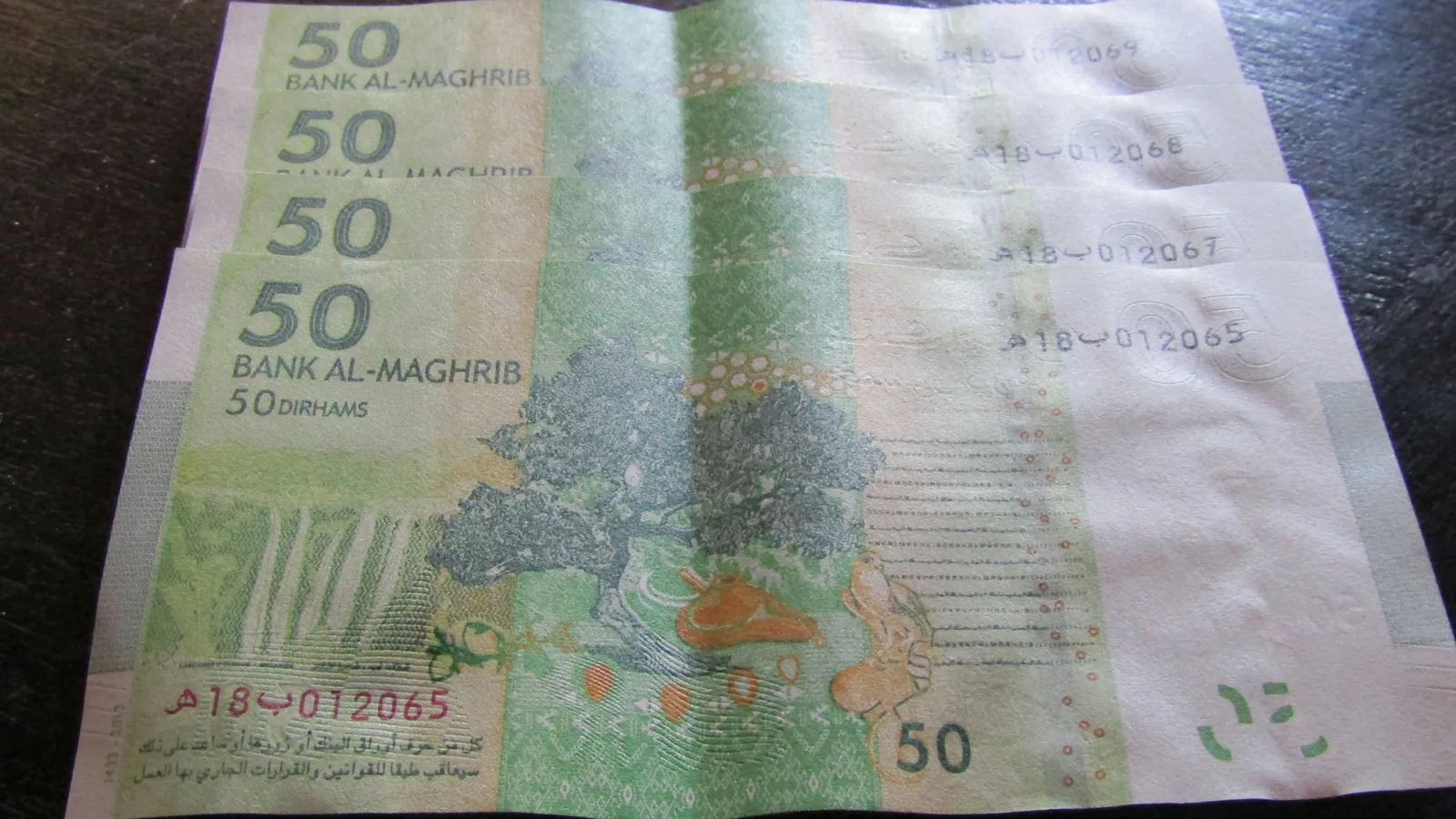
Since 1 July 2026, Moroccan property deeds above MAD 300,000 may trigger an additional 2% registration duty when payment is not traceable or when the deed does not state payment references. For business goodwill, the MAD 300,000 threshold does not apply.
Watch point: The rule is about fiscal traceability, not a general ban on cash. DGI guidance says the 2% applies only to the cash fraction when identifiable, while bank credit, non-endorsable crossed cheque, bank transfer, electronic process and the bank deposit referred to in Article 193 may avoid the extra duty when references are recorded.
Transactions, threshold, accepted methods and examples
| Case | Ordinary duty | Extra 2% | Reading |
|---|---|---|---|
| Apartment 280,000 DH cash | 4% = 11,200 DH | 0 DH | Below property threshold |
| Apartment 400,000 DH cash | 4% = 16,000 DH | 8,000 DH | Threshold exceeded |
| Apartment 600,000 DH with 200,000 DH cash | 4% = 24,000 DH | 4,000 DH | On identifiable cash part |
| Business goodwill 290,000 DH cash | 6% = 17,400 DH | 5,800 DH | No threshold |
| Buyer | Check | Risk | Action |
|---|---|---|---|
| Payment | Bank or notary references | Informal supplement | Keep proof and receipt |
| Area | Price, access, real demand | Brochure price | Compare with transactions and delivered units |
| Project | Permit, plans, progress | Oral promise | Have the file reviewed |
| Yield | Net after costs | Undocumented guarantee | Test a cautious scenario |

Method
The rule is about fiscal traceability, not a general ban on cash. DGI guidance says the 2% applies only to the cash fraction when identifiable, while bank credit, non-endorsable crossed cheque, bank transfer, electronic process and the bank deposit referred to in Article 193 may avoid the extra duty when references are recorded.
Prices, neighborhoods, developer documents, purchase procedure and S.A.F.E. should be read together, within the same language version.
S.A.F.E. reading
Under the S.A.F.E. methodology, the file is reviewed against available documents: price, payments, beneficiary, contract, permits, delivery, charges and consistency of commercial claims. This is an internal methodology status, not public certification, legal guarantee or yield promise.
Checklist
- Identify the official or contractual source.
- Check dates, amounts, references and beneficiaries.
- Compare the property with its district and real use case.
- Keep proof in one file.
- Ask a professional for any legal, tax or technical point.
Practical reading of the tax rule
The 1 July 2026 date matters because the measure applies to deeds and agreements drawn up from that date. A previous negotiation or reservation conversation is not enough: the date of the deed, type of asset, declared price and recorded payment references must be checked.
The MAD 300,000 threshold concerns transfers for consideration of real estate or real property rights. It should not be mechanically applied to business goodwill, because the circular states that goodwill is not covered by that minimum. This prevents two common mistakes: assuming every cash payment always triggers 2%, or assuming a small goodwill transfer automatically escapes the supplement.
For the buyer, the right reflex is to prepare the banking file before signing: source of funds, sending account, beneficiary account, transfer or cheque references, receipt, and consistency with the contractual price. For the seller, the risk is accepting an informal part that is hard to justify later. For the notary, the issue is being able to document payment methods in the deed and file accounting.
The measure does not replace other checks: title, seller identity, authority to sign, total price, acquisition costs, resale tax and property compliance still need review. It simply adds a documentary discipline layer around payment.
Practical Audit Grid
This grid turns the analysis into concrete questions to ask before signing, reserving, investing or publishing a yield assumption.
- date of deed: verify this point with a dated document, a clear amount and an accountable person. For this topic, the mistake is accepting a stand-alone claim without knowing whether it comes from an official document, a contract, market observation or a sales argument. Record the source, consultation date and any reservation in the purchase file.
- declared price: verify this point with a dated document, a clear amount and an accountable person. For this topic, the mistake is accepting a stand-alone claim without knowing whether it comes from an official document, a contract, market observation or a sales argument. Record the source, consultation date and any reservation in the purchase file.
- MAD 300,000 threshold: verify this point with a dated document, a clear amount and an accountable person. For this topic, the mistake is accepting a stand-alone claim without knowing whether it comes from an official document, a contract, market observation or a sales argument. Record the source, consultation date and any reservation in the purchase file.
- real property rights: verify this point with a dated document, a clear amount and an accountable person. For this topic, the mistake is accepting a stand-alone claim without knowing whether it comes from an official document, a contract, market observation or a sales argument. Record the source, consultation date and any reservation in the purchase file.
- business goodwill: verify this point with a dated document, a clear amount and an accountable person. For this topic, the mistake is accepting a stand-alone claim without knowing whether it comes from an official document, a contract, market observation or a sales argument. Record the source, consultation date and any reservation in the purchase file.
- cash fraction: verify this point with a dated document, a clear amount and an accountable person. For this topic, the mistake is accepting a stand-alone claim without knowing whether it comes from an official document, a contract, market observation or a sales argument. Record the source, consultation date and any reservation in the purchase file.
- bank credit: verify this point with a dated document, a clear amount and an accountable person. For this topic, the mistake is accepting a stand-alone claim without knowing whether it comes from an official document, a contract, market observation or a sales argument. Record the source, consultation date and any reservation in the purchase file.
- crossed cheque: verify this point with a dated document, a clear amount and an accountable person. For this topic, the mistake is accepting a stand-alone claim without knowing whether it comes from an official document, a contract, market observation or a sales argument. Record the source, consultation date and any reservation in the purchase file.
- bank transfer: verify this point with a dated document, a clear amount and an accountable person. For this topic, the mistake is accepting a stand-alone claim without knowing whether it comes from an official document, a contract, market observation or a sales argument. Record the source, consultation date and any reservation in the purchase file.
- electronic payment: verify this point with a dated document, a clear amount and an accountable person. For this topic, the mistake is accepting a stand-alone claim without knowing whether it comes from an official document, a contract, market observation or a sales argument. Record the source, consultation date and any reservation in the purchase file.
- bank deposit: verify this point with a dated document, a clear amount and an accountable person. For this topic, the mistake is accepting a stand-alone claim without knowing whether it comes from an official document, a contract, market observation or a sales argument. Record the source, consultation date and any reservation in the purchase file.
- set-off with documented debt: verify this point with a dated document, a clear amount and an accountable person. For this topic, the mistake is accepting a stand-alone claim without knowing whether it comes from an official document, a contract, market observation or a sales argument. Record the source, consultation date and any reservation in the purchase file.
- advance payments: verify this point with a dated document, a clear amount and an accountable person. For this topic, the mistake is accepting a stand-alone claim without knowing whether it comes from an official document, a contract, market observation or a sales argument. Record the source, consultation date and any reservation in the purchase file.
- notary accounting: verify this point with a dated document, a clear amount and an accountable person. For this topic, the mistake is accepting a stand-alone claim without knowing whether it comes from an official document, a contract, market observation or a sales argument. Record the source, consultation date and any reservation in the purchase file.
- seller account: verify this point with a dated document, a clear amount and an accountable person. For this topic, the mistake is accepting a stand-alone claim without knowing whether it comes from an official document, a contract, market observation or a sales argument. Record the source, consultation date and any reservation in the purchase file.
- developer account: verify this point with a dated document, a clear amount and an accountable person. For this topic, the mistake is accepting a stand-alone claim without knowing whether it comes from an official document, a contract, market observation or a sales argument. Record the source, consultation date and any reservation in the purchase file.
- intermediary risk: verify this point with a dated document, a clear amount and an accountable person. For this topic, the mistake is accepting a stand-alone claim without knowing whether it comes from an official document, a contract, market observation or a sales argument. Record the source, consultation date and any reservation in the purchase file.
- informal supplement: verify this point with a dated document, a clear amount and an accountable person. For this topic, the mistake is accepting a stand-alone claim without knowing whether it comes from an official document, a contract, market observation or a sales argument. Record the source, consultation date and any reservation in the purchase file.
- split payments: verify this point with a dated document, a clear amount and an accountable person. For this topic, the mistake is accepting a stand-alone claim without knowing whether it comes from an official document, a contract, market observation or a sales argument. Record the source, consultation date and any reservation in the purchase file.
- proof of funds: verify this point with a dated document, a clear amount and an accountable person. For this topic, the mistake is accepting a stand-alone claim without knowing whether it comes from an official document, a contract, market observation or a sales argument. Record the source, consultation date and any reservation in the purchase file.
- receipt wording: verify this point with a dated document, a clear amount and an accountable person. For this topic, the mistake is accepting a stand-alone claim without knowing whether it comes from an official document, a contract, market observation or a sales argument. Record the source, consultation date and any reservation in the purchase file.
- contract consistency: verify this point with a dated document, a clear amount and an accountable person. For this topic, the mistake is accepting a stand-alone claim without knowing whether it comes from an official document, a contract, market observation or a sales argument. Record the source, consultation date and any reservation in the purchase file.
- buyer responsibility: verify this point with a dated document, a clear amount and an accountable person. For this topic, the mistake is accepting a stand-alone claim without knowing whether it comes from an official document, a contract, market observation or a sales argument. Record the source, consultation date and any reservation in the purchase file.
- seller responsibility: verify this point with a dated document, a clear amount and an accountable person. For this topic, the mistake is accepting a stand-alone claim without knowing whether it comes from an official document, a contract, market observation or a sales argument. Record the source, consultation date and any reservation in the purchase file.
- MRE buyer: verify this point with a dated document, a clear amount and an accountable person. For this topic, the mistake is accepting a stand-alone claim without knowing whether it comes from an official document, a contract, market observation or a sales argument. Record the source, consultation date and any reservation in the purchase file.
- foreign buyer: verify this point with a dated document, a clear amount and an accountable person. For this topic, the mistake is accepting a stand-alone claim without knowing whether it comes from an official document, a contract, market observation or a sales argument. Record the source, consultation date and any reservation in the purchase file.
- tax audit trail: verify this point with a dated document, a clear amount and an accountable person. For this topic, the mistake is accepting a stand-alone claim without knowing whether it comes from an official document, a contract, market observation or a sales argument. Record the source, consultation date and any reservation in the purchase file.
- registration duty: verify this point with a dated document, a clear amount and an accountable person. For this topic, the mistake is accepting a stand-alone claim without knowing whether it comes from an official document, a contract, market observation or a sales argument. Record the source, consultation date and any reservation in the purchase file.
- future resale file: verify this point with a dated document, a clear amount and an accountable person. For this topic, the mistake is accepting a stand-alone claim without knowing whether it comes from an official document, a contract, market observation or a sales argument. Record the source, consultation date and any reservation in the purchase file.
- S.A.F.E. reconciliation: verify this point with a dated document, a clear amount and an accountable person. For this topic, the mistake is accepting a stand-alone claim without knowing whether it comes from an official document, a contract, market observation or a sales argument. Record the source, consultation date and any reservation in the purchase file.
FAQ
What is the short answer?
Since 1 July 2026, Moroccan property deeds above MAD 300,000 may trigger an additional 2% registration duty when payment is not traceable or when the deed does not state payment references. For business goodwill, the MAD 300,000 threshold does not apply.
What should be checked first?
Total price, documents, payment references, beneficiary identity and consistency between commercial promise and contract.
Does S.A.F.E. guarantee the outcome?
No. S.A.F.E. structures checks and reservations from available documents, without public, legal or financial guarantee.
Watch point: This article is editorial analysis. It does not replace a notary, lawyer, tax adviser, architect or bank.
Read next: S.A.F.E., Dahir, investment, tourism, VEFA.
Keywords
Disclaimer : This article is editorial analysis and does not constitute financial, legal or tax advice. Any investment decision should be preceded by consultation with qualified professionals.