Keep the indicators separate
| Indicator | Latest reference used | Period |
|---|---|---|
| Tourist arrivals | 14.1 million; +4.5% | January–August 2026 |
| August arrivals | More than 2 million; +3% | August 2026 |
| First-half arrivals | Nearly 9.4 million; +6% | January–June 2026 |
| Scheduled airline seats | 7.74 million; +13% | Summer 2026 ONMT programme |
| National target | 26 million tourists | 2030 horizon |
The six-month figure is already included in the eight-month total. Scheduled seats measure offered capacity, not passengers actually carried. The 2030 figure remains a policy target rather than a guaranteed forecast.
Overnight stays in major destinations
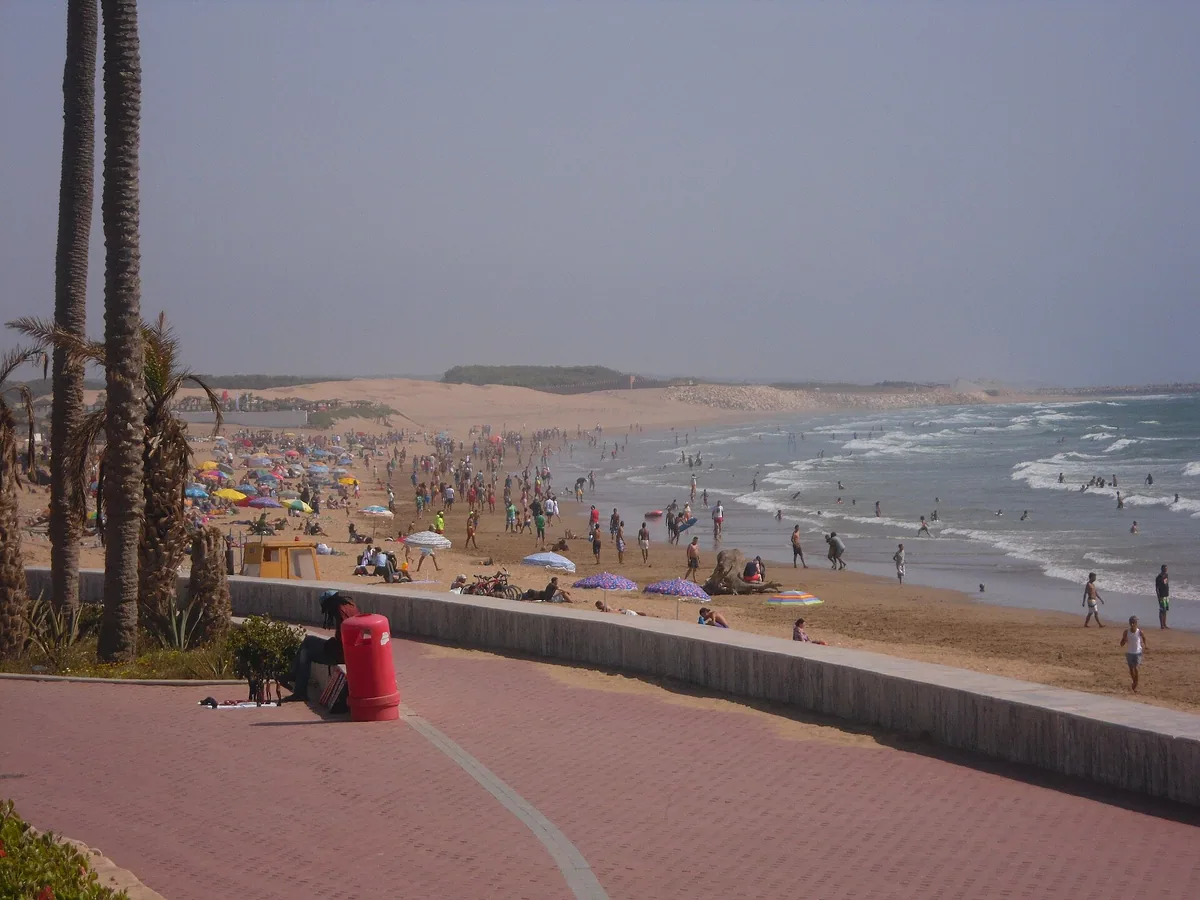
The DEPF update relayed by Maroc.ma in early September reports first-half growth in overnight stays of 10% in Marrakech, 11% in Agadir and Casablanca, 10% in Tangier, 20% in Rabat and 23% in Ouarzazate. Fez and Essaouira each gained 6%, Al Haouz 7% and Errachidia 9%.
These changes do not rank destinations by volume. A smaller destination can grow faster while still recording fewer nights than a major centre. Statistically tracked accommodation nights do not necessarily include every stay with relatives or every rental.
Airports show the summer peak
Airports of Morocco, formerly ONDA, reports peak days of 46,439 passengers at Casablanca Mohammed V, more than 30,000 at Marrakech-Menara, 13,309 in Tangier, 11,973 in Agadir and 9,226 at Rabat-Salé. These are daily peaks, not monthly totals.
Airport passengers can include residents, domestic travellers and connecting passengers. Adding airport traffic to tourist arrivals would mix populations and create double counting. For travellers, the practical lesson is to allow time for check-in, controls and transfers.
Receipts, source markets and the value of growth
The August statement used here does not provide a complete source-market breakdown or comparable end-August tourism receipts. We therefore do not present a nationality ranking or revenue from another period as an eight-month result.
Economic benefits need to be assessed through arrivals, length of stay, spending, occupancy and geographical distribution together. More visitors do not guarantee the same percentage increase in income for every hotel, guide or restaurant. Costs, seasonality and dependence on individual markets also matter.
Planning autumn and looking towards 2030
ONMT links its strategy to air connectivity and a broader range of visitor experiences. Its board met on 24 June; the announcement was published on 2 July. Those dates describe different events. September’s cultural calendar includes the Fado Festival in Rabat and Tanjazz in Tangier.
When booking, compare neighbourhood, access, cancellation terms and transport costs. National tourism growth does not establish availability or profitability for a particular property.
Frequently asked questions
Does 14.1 million cover the full year?
No. It covers January through August 2026.
Has Ouarzazate overtaken Marrakech?
A 23% rise in nights does not establish that. A growth rate does not show the absolute volume.
Are 26 million tourists in 2030 guaranteed?
No. This national target depends on demand, supply and visitor capacity.
Further reading
Keywords