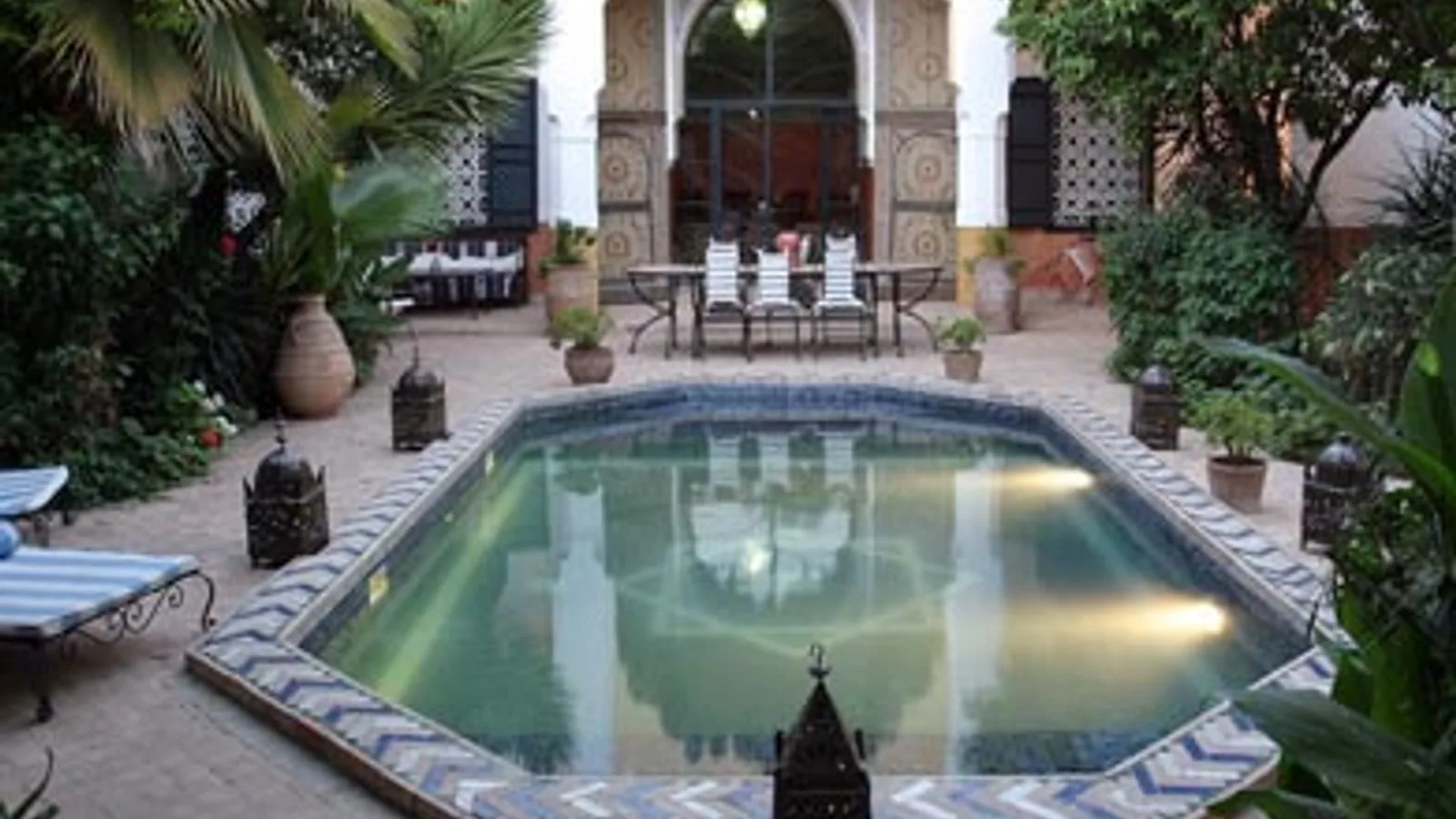
A riad to renovate in the Marrakech medina is not an ordinary renovation project. The property is often registered under the customary Melk regime rather than a modern Titre Foncier, the street-facing facade cannot be touched without authorization, and the renovation budget can vary tenfold depending on the finish level targeted. Here is what the 2026 figures actually show, before signing a preliminary sale agreement on a riad “with strong potential.”
The riad market in 2026: six micro-markets, not one
The Marrakech medina, a UNESCO World Heritage site since 1985, has roughly 12,000 riads, of which 1,200 to 1,400 are operated as guesthouses or boutique hotels according to the Regional Tourism Council. The market rose by an average of about 12% between 2024 and 2026, driven by the post-2022 tourism recovery and the stabilization of the boutique-hotel segment.
Prices vary sharply by area:
| Zone | Renovated price (MAD/m²) | To-renovate price (MAD/m²) |
|---|---|---|
| Mouassine / Sidi Abdelaziz | 18,000 – 28,000 | 8,000 – 12,000 |
| Kasbah | 15,000 – 22,000 | 7,000 – 10,000 |
| Mellah | 13,000 – 19,000 | 6,000 – 9,000 |
| South medina (around the Bahia Palace) | 14,000 – 20,000 | 6,000 – 9,500 |
| Bab Doukkala / Derb Dabachi | 12,000 – 18,000 | 5,500 – 8,500 |
| Bab Ailen / Derb Moulay Abdelkader | 10,000 – 14,000 | 4,500 – 7,000 |
For an overall acquisition, a small riad to renovate (180-240 m², 3-4 bedrooms) sells for between 1.2 and 2.8 million MAD; a mid-market riad already renovated (240-320 m²) for between 4 and 7 million. For a broader look at prices by neighborhood outside the medina, see our Marrakech real estate prices comparison.
Titre Foncier or Melk: the legal risk specific to riads
This is the point most often underestimated by foreign buyers. In the medina, roughly 35 to 40% of riads remain under the Melk regime (a customary title established by adouls notaries) rather than under a Titre Foncier registered with ANCFCC. The difference is not cosmetic:
- a riad with a Titre Foncier can be bought securely, can be mortgaged by a Moroccan bank and carries no price discount;
- a riad under Melk remains purchasable, but at a market discount of 15 to 25% compared with an equivalent Titre Foncier property, and it cannot be financed with a mortgage until it is registered;
- a riad under Habous status (an inalienable endowment, rarer) can only be leased long-term (zina) — best avoided for a standard purchase project.
Registering a Melk property as a Titre Foncier is possible under the procedure set out by law 14-07, but takes 12 to 24 months and costs between 30,000 and 80,000 MAD. This check complements the one already required on the land title and moulkiya before buying in Marrakech, and should be carried out by a notary before any payment.
The land-title status determines access to Moroccan bank financing: without a registered Titre Foncier, no local bank will record a mortgage on the property.
Renovating in a UNESCO-listed medina: what the authorities require

The Marrakech medina is protected by a specific planning regime, currently governed by the development and heritage-protection plan for the Medina district, which covers 667 hectares with a buffer zone along the ramparts and a 30-metre protection zone around Jemaa el-Fna square (under the dahir of 20 July 1920). In practice, any renovation project touching the structure or the exterior appearance must go through a technical file signed by an architect, reviewed by the technical commission that brings together the local authority, the Urban Agency and the Inspectorate of Historic Monuments and Sites.
The most commonly applied rules:
- no alteration of a street-facing facade without authorization;
- traditional materials favored: tadelakt, zellige, natural plaster, cedar wood;
- existing height and volume must be preserved — adding a floor is the most frequent reason for refusal;
- visible air-conditioning units on the facade and glass verandas facing the street are generally prohibited.
A project must be validated by an architect before the preliminary sale agreement is even signed: some alterations, in particular adding a floor or extending a terrace visible from the street, are simply not feasible within the protected perimeter. Allow 3 to 6 months to obtain the work permit once the file is submitted.
The real renovation budget: 2026 ranges

Cost depends above all on the finish level and the share of traditional craftsmanship (custom zellige, tadelakt, carved cedar wood):
| Renovation level | Cost (MAD/m²) |
|---|---|
| Light (paint, basic plumbing, electricity) | 2,500 – 4,500 |
| Mid-market (standard finishes, decent zellige) | 5,000 – 8,000 |
| High-end (medina craftsmanship, custom zellige, tadelakt) | 9,000 – 15,000 |
| Prestige (major workshops, reclaimed antique elements, spa) | 16,000 – 25,000 |
For a 200 m² riad, this typically works out to 1 to 1.8 million MAD for a complete mid-market to high-end renovation, before contingencies. Allow 9 to 18 months depending on the ambition of the project, and build in a safety margin — the medina’s old structures often hide invisible issues (foundations, damp, utilities) that only surface once work begins.
What return depending on the exploitation model
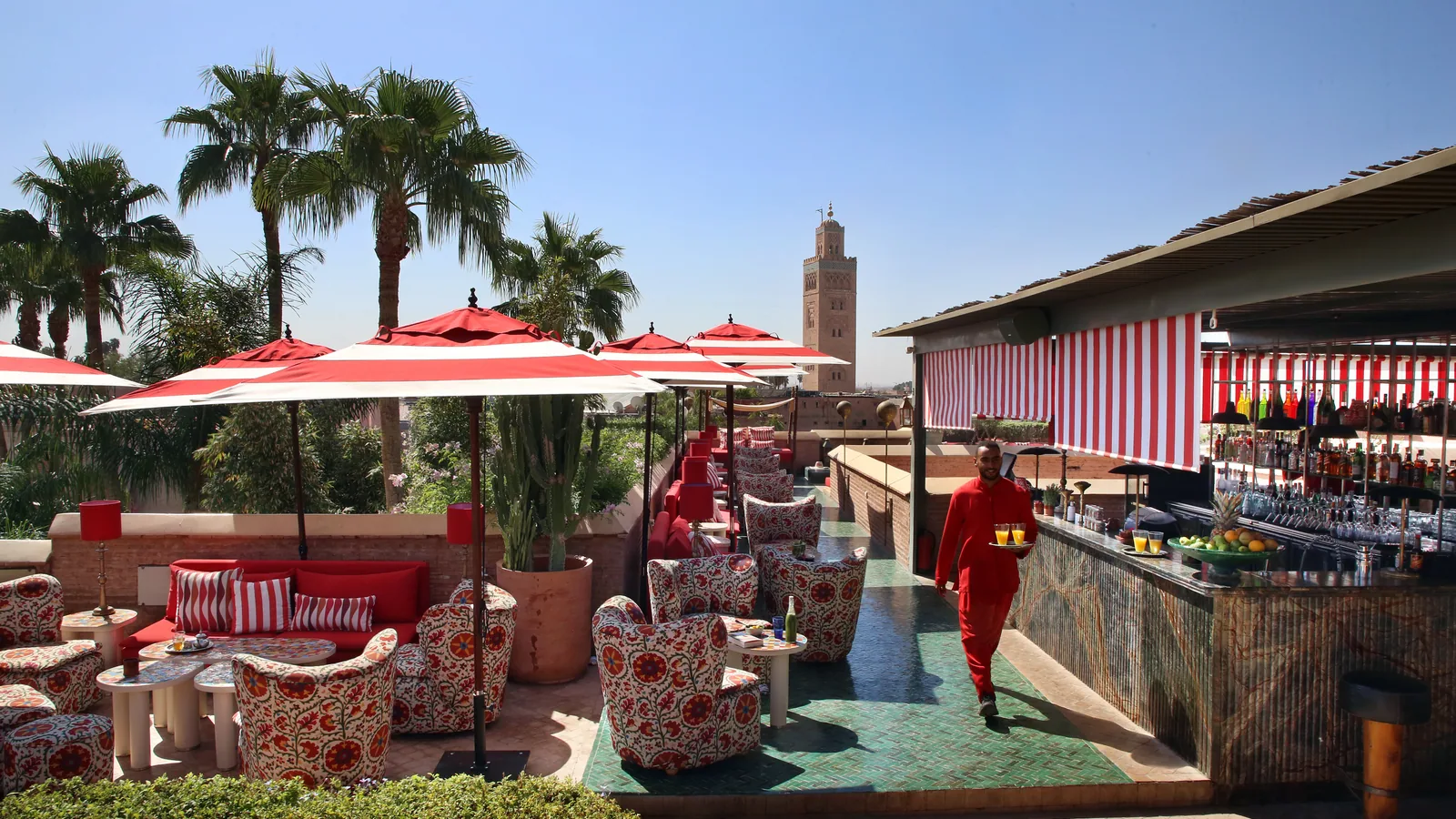
The choice of exploitation model radically changes the profitability:
| Strategy | Gross yield | Net yield |
|---|---|---|
| Airbnb / short-term furnished rental | 12 – 18% | 6 – 9% |
| Self-operated boutique hotel | 16 – 22% | 7 – 12% |
| Rental via a management company | 10 – 14% | 5 – 8% |
| Long-term rental (annual lease) | 4 – 6% | 3 – 4.5% |
The gap between gross and net yield comes down to management cost: a management company typically takes 20 to 25% of revenue, and operating as a guesthouse requires registration for the business tax and VAT above 500,000 MAD in turnover, on top of the tourism operating license and the “keys” classification. For the regulatory side of short-term rental, our guide to the law 80-14 license in Marrakech covers the full procedure. The average annual occupancy rate for a well-located, well-managed riad sits between 55 and 75%, with strong seasonality between October-May and June-August.
Checklist before signing
- Check whether the riad is under Titre Foncier or Melk, and price in the discount or registration cost accordingly
- Have the renovation project validated by a licensed architect before the preliminary agreement, especially any added floor or facade change
- Request a structural and damp diagnosis before setting a final renovation budget
- Budget a 15 to 20% margin for hidden repairs
- Model the net yield (after management, platform commission, local taxes), not just the headline gross yield
- Factor the work-permit timeline (3 to 6 months) into the overall project schedule
What to remember
A riad remains a unique asset on the Moroccan property market, but it is also the one that demands the most checks before purchase: land-title status, heritage permits and renovation budget form a triptych that can make or break a project’s profitability. The price and yield ranges presented here are 2026 market data to confirm with a notary, a renovation-specialist architect and, where relevant, an independent property expert before any financial commitment.
Keywords
Disclaimer : This article is editorial analysis and does not constitute financial, legal or tax advice. Any investment decision should be preceded by consultation with qualified professionals.