
A plot listed at 800 MAD/m² on the Ourika road, against 6,000 MAD/m² and up in Hivernage: the price gap naturally pulls investors toward Marrakech’s outskirts. But a cheaper plot isn’t necessarily a simpler one to buy. Part of the peri-urban land around Marrakech is still classified as agricultural, collective, or guich (military-origin) land — three statuses that restrict or outright forbid a sale to a foreigner, or that require administrative approval before any signature. Here’s what to check before committing.
Bare, agricultural or buildable land: three assets that price alone won’t tell apart
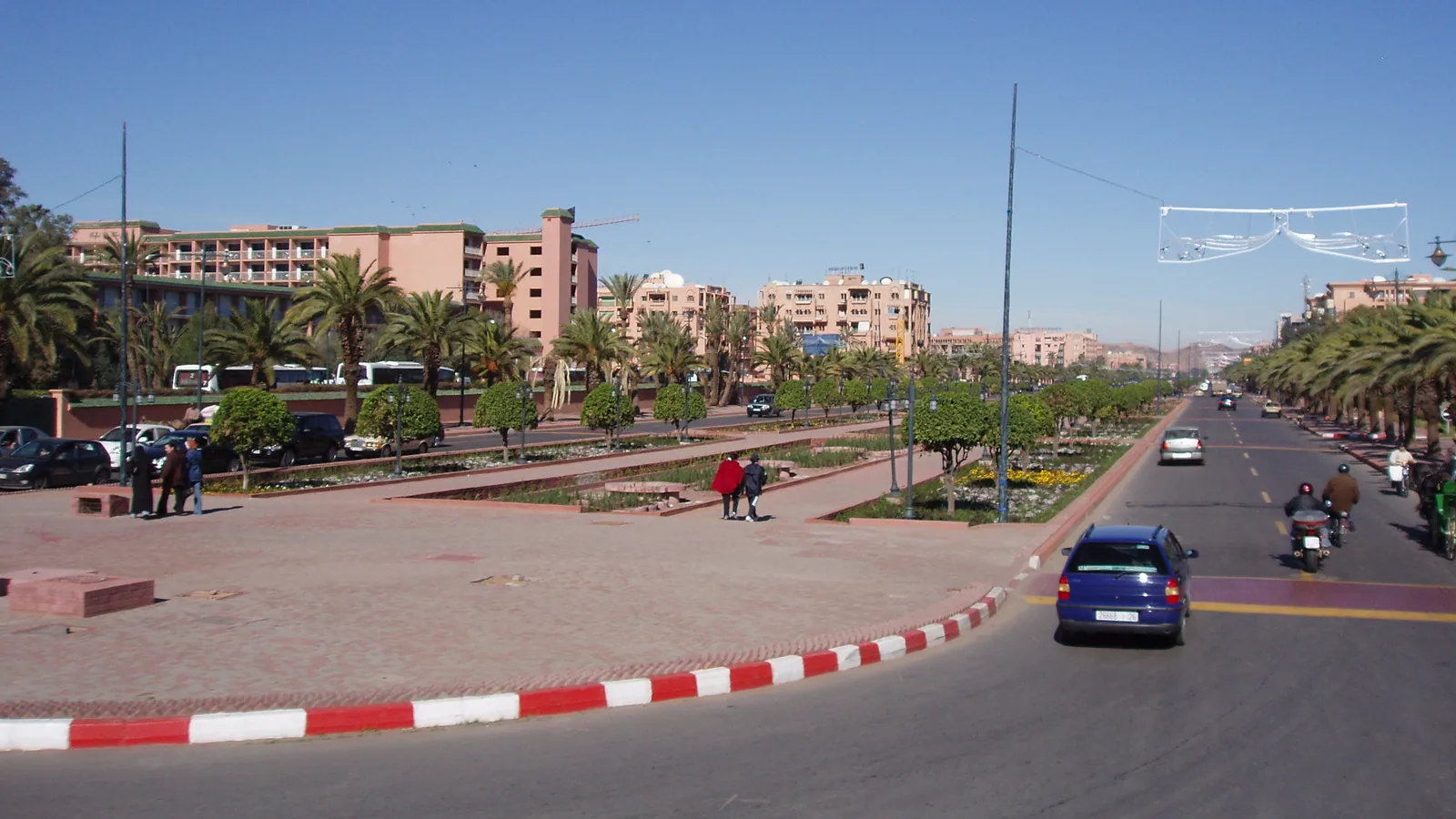
Land prices per square meter in Marrakech vary widely by area: 2026 market ranges run from around 800 MAD/m² on peripheral roads (Route de Fès, Route de l’Ourika) to over 6,000 MAD/m² in the most sought-after districts (Hivernage, Palmeraie), with some serviced plots inside secured golf estates going even higher.
That listed price says nothing, however, about the plot’s legal status — that is, the actual right you’re buying:
- Buildable urban land, generally melk (private property), either registered or in the process of being registered.
- Agricultural or agriculturally-designated land, even close to the city, subject to specific transfer rules.
- Collective (soulaliyate) or guich land, where the seller often holds only a right of enjoyment, not full, freely transferable ownership.
The same-looking plot, seen from the road, can fall under either regime. The only way to know is to check the status with the relevant administration — never take the seller’s or an agent’s word for it.
Foreigners and foreign-owned companies: the ban on agricultural land

Since law No. 1-73-2131 of 1973, Moroccan law bans foreign individuals, or companies whose capital isn’t 100% Moroccan-owned, from acquiring agricultural or agriculturally-designated land. The ban specifically targets land located wholly or partly outside urban perimeters.
The only legal route for a foreigner who wants to buy this type of land is the non-agricultural designation certificate (AVNA, sometimes abbreviated VNA), issued in two stages:
- a provisional certificate, granted based on the project and a preliminary sale agreement, after review by the regional unified investment committee chaired by the regional Wali (or delegated to the CRI or the urban agency);
- a final certificate, issued after on-site confirmation that the project has actually been carried out.
The committee must rule within a maximum of 30 days after the file is submitted by the Regional Investment Center, but in practice it only meets at set intervals — roughly every three weeks for the Marrakech region. The file must include an ownership certificate, the preliminary sale agreement, a cadastral plan and a project summary, generally prepared with an architect. A ministerial circular from May 2022 clarified the approval criteria and opened up — still to a limited degree — access to the AVNA for buying property from already-approved and completed subdivisions.
“Any refusal must be justified and can be appealed before the regional Wali or before a ministerial steering committee.”
In practice: if a plot located outside an urban perimeter is offered to you without an AVNA being part of the deal, ask the question before signing anything — not after.
Collective and guich land: the trap of “accessible” plots on the outskirts
Part of the land around Marrakech falls under regimes even more restrictive than ordinary agricultural melk. Collective land (soulaliyate) belongs to an ethnic community — a douar, a tribe — rather than an individual: rights-holders only have enjoyment of it, under the administrative oversight of the Ministry of Interior. The 2019 reform (law 62-17) opened paths toward converting such land into private ownership (melkisation) for the benefit of rights-holders, particularly within urban perimeters, but a sale to a third party still requires approval from the Trusteeship Council, with no guaranteed timeline or outcome.
Guich land, historically granted to tribes in exchange for military service, is even more restrictive: the occupant holds a right of enjoyment passed down through generations, but not freely transferable ownership. One documented case illustrates the concrete risk: a tourism project near Marrakech, launched on the basis of an investment agreement, ran into legal agricultural occupation by families settled on a guich plot that the seller had presented as available.
The rule of caution is simple: never invest in construction before the land transfer is legally secured. Until a collective or guich plot has been converted to melk status and confirmed by an enforceable title, the buyer holds only an expectation, not a settled right — whatever price was paid.
Checking before you sign: ownership certificate, subdivision, urban planning notice

For land already registered, the first check is the ownership certificate issued by ANCFCC (the National Agency for Land Registry, Cadastre and Cartography): it costs 100 MAD, is issued within 24 to 72 hours at the counter or online via the official portal or Mohafadati, and shows the registered owner(s), the exact surface area and any charges (mortgages, oppositions, seizures). Our guide to land titles and moulkiya covers the full procedure.
If the land needs to be subdivided — to buy only part of it, for example — the operation falls under law No. 25-90 of June 17, 1992 on subdivisions, housing groups and land splits, currently being reformed by draft law 34-21. Depending on the situation, prior municipal authorization is required, and the split only becomes legally effective once ANCFCC creates the individual titles: until then, you’re only buying an undivided share, never an isolated “piece of land.”
Finally, before negotiating price, ask the municipality for the urban planning information notice (NRU): it specifies zoning, buildability rules, setback requirements and the plot’s real potential — factors that often weigh more heavily on value than a simple price-per-square-meter figure.
Checklist before buying land in Marrakech
- Ask for the land title number and order a recent ownership certificate (100 MAD, 24-72h) rather than relying on the seller’s word.
- Check whether the plot sits inside or outside the urban perimeter: this boundary determines whether the ban on foreign agricultural ownership applies.
- If the land is agricultural and you’re not Moroccan, require that the deal include an AVNA before any significant payment — expect several weeks of processing.
- Get written confirmation from local authorities on whether the land is melk, collective (soulaliyate) or guich: it’s never something you can tell by looking.
- Request the urban planning information notice (NRU) from the municipality before valuing the land on price-per-square-meter alone.
- Don’t start any construction or make a significant payment until the transfer of ownership is legally secured — especially on collective or guich land.
A cheaper plot on Marrakech’s outskirts isn’t a bad idea in itself: demand along the city’s expansion corridors, already documented in our guide to peri-urban areas, remains real. But the apparent savings at purchase are worthless if the plot’s legal status isn’t clear. Before discussing price, always check what right you’re actually buying — and budget, on top of that, for the actual acquisition costs that also apply to bare land.
This article is for general informational purposes and does not replace advice from a notary, a land law attorney, or ANCFCC for a specific situation. Thresholds, timelines and administrative procedures change; always verify current information before any financial commitment.
Keywords
Disclaimer : This article is editorial analysis and does not constitute financial, legal or tax advice. Any investment decision should be preceded by consultation with qualified professionals.
Sources
- Atlas Immobilier — Conditions for buying rural land (VNA)
- ReaConsult — Collective (soulaliyate) land in Morocco: purchase, valuation, risks
- ReaConsult — Subdividing a land title in Morocco
- ReaConsult — Land tenure statuses in Morocco: melk, collective, guich, habous, state domain
- ANCFCC — Ownership certificate, official portal