
Financing a purchase in Marrakech through a Moroccan bank loan, rather than paying cash, runs into a rule rarely spelled out in sales brochures: foreign exchange regulation sets a minimum foreign-currency contribution and a financing ceiling that differ depending on whether the buyer is a resident, a non-resident foreigner, or a Moroccan living abroad (MRE). Here is what the official text says, what 2026 banking data confirms, and what to budget before submitting an application.
Three profiles, three levels of access to credit
Moroccan banks do not treat every mortgage application the same way — it depends on the borrower’s status.
- Resident foreigner (valid residence permit, at least 6 months of residency, a Moroccan bank account active for 3+ months): financing up to 80-90% of the price for a primary residence, 70-80% for a secondary or rental property, over a maximum term of 25 years.
- Non-resident foreigner (buying for investment or as a second home without a residence permit): Moroccan bank financing is more restricted, generally 50 to 70% of the price, over a maximum term of 15 to 20 years, with a mandatory 30-50% cash down payment on top.
- MRE: the most favorable terms among the three foreign profiles — financing up to 80% of the price, terms up to 25 years, and dedicated rates typically 0.2 to 0.3 points below standard rates through programs such as Attijariwafa MRE, Banque Populaire, or BMCE Bank of Africa.

What Moroccan regulation precisely requires
Dirham financing for non-resident foreigners and MRE is not left to each bank’s commercial discretion: it is governed by Article 793 of the General Instruction on Foreign Exchange Operations, published by the Office des Changes (Morocco’s foreign exchange authority). The text sets four cumulative conditions:
- A foreign-currency contribution of at least 30% of the property price, paid either through a currency transfer or a debit from a convertible dirham account held in the buyer’s name.
- Collateral matching the loan amount: either a first-rank mortgage on the property or a guarantee issued by a foreign bank.
- Repayment (principal, interest, fees) must be made through currency transfers or debits from a convertible dirham account — repaying with untracked local cash is not an option.
- Ancillary costs (notary fees, registration duties, land registry fees) must also be covered by repatriated foreign currency, not by funds of Moroccan origin.
The buyer must also submit a sworn declaration stating they do not already own another residence in Morocco in order to qualify.
An alternative exists for those who prefer to borrow directly abroad: Article 796 allows Moroccan banks to issue a guarantee to foreign banks, covering up to 100% of the property’s value, to secure a foreign-currency loan granted to a non-resident.
This second route avoids the 30% foreign-currency contribution, but shifts the entire exchange-rate and negotiation risk onto the bank in the buyer’s country of residence.
What the loan actually costs in 2026
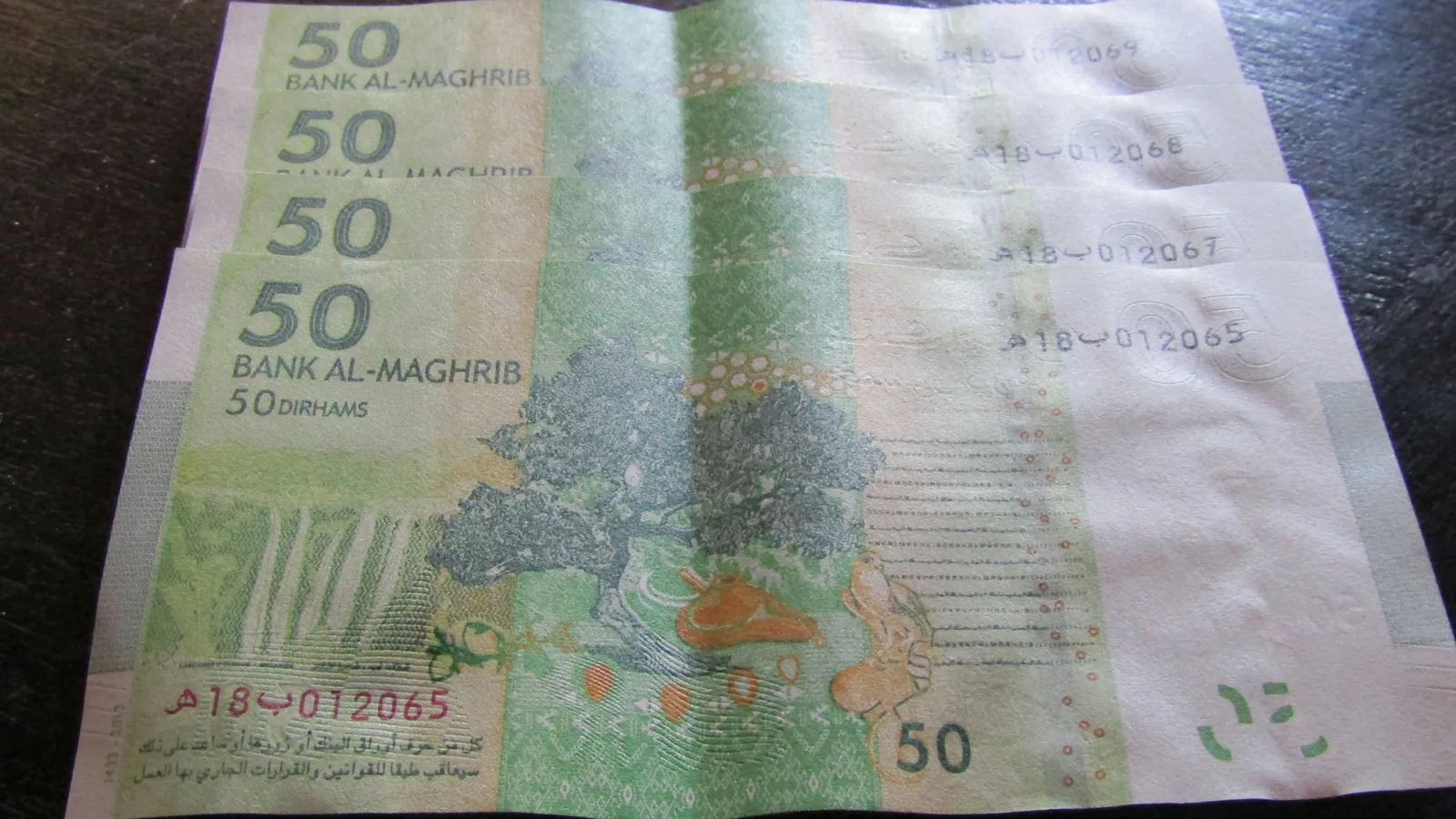
The monetary environment remains favorable to borrowers. Bank Al-Maghrib kept its policy rate unchanged at 2.25% at its March 2026 meeting, its lowest level in several years, after two consecutive cuts in 2024 and 2025.
On the national market, broker Afdal, drawing on 36,500 real bank offers collected from ten banks, puts the average pre-tax rate at 4.64% in the first half of 2026 (up from 4.59% in the second half of 2025), for an average APR of 5.49%. The gaps between profiles remain significant: private-sector employees get the best rates, as low as 4% on long 16-to-25-year terms, versus 4.2-4.4% for civil servants, 4.35% for self-employed professionals, and up to 4.5% for business owners and retirees. Mandatory death-and-disability insurance (ADI) ranges from 0.15% to 0.45% depending on the lender — a gap that can amount to roughly 65,000 MAD on a one-million-dirham loan over 25 years.
For foreign and MRE profiles specifically, comparison site Wafir.ma places observed APRs between 3.9% and 5.4% depending on the bank and the file, with BMCI (BNP Paribas Morocco) and Société Générale Maroc cited as the most open to non-residents, offering faster decision times (5 to 10 days). Attijariwafa Bank remains the go-to for MRE thanks to its network of correspondent branches in France, Spain, Belgium, Italy, and the Netherlands.
The costs layered on top of the loan
The advertised rate does not capture the full cost. On top of interest come the death-and-disability insurance mentioned above, plus the usual acquisition costs (registration duties, notary fees, land registry fees) already broken down line by line in our guide to real estate taxation in Marrakech. For a mortgage specifically, add the bank’s file fees and, where relevant, currency-conversion fees if repayments are made from a foreign account.
The process, step by step

The process follows a logic close to a standard mortgage, with extra checks tied to non-resident status:
- Pre-approval: based on income and bank statements, the bank issues an indicative offer within 24 to 72 hours, valid for 30 to 60 days — useful for negotiating from a position of strength before signing a preliminary contract.
- Preliminary sale contract: signed with a financing contingency clause, allowing withdrawal without penalty if the loan is refused.
- Full application file: property title, preliminary contract, proof of income (foreign tax returns for non-residents), bank statements covering 6 to 12 months, and often an international credit report. Typical processing time: 15 to 30 days.
- Loan offer and cooling-off period: once the firm offer is issued, a mandatory 10-day legal cooling-off period applies before it can be accepted — a good window to make one last comparison between banks.
- Notarial deed and disbursement: signing at the notary’s office, funds paid directly to the seller, mortgage registration, and title transfer at the Conservation Foncière, typically within 2 to 4 weeks.
Checklist before applying
- Identify your exact profile (resident foreigner, non-resident, or MRE) — it directly determines the LTV and term you can access
- Confirm the 30% foreign-currency contribution can be documented through a currency transfer or a convertible dirham account
- Compare at least two or three banks, especially those known to be open to non-residents (BMCI, Société Générale, Attijariwafa MRE, CIH)
- Ask for the full APR, including death-and-disability insurance, not just the headline nominal rate
- Include a financing contingency clause in the preliminary sale contract
- Budget the ancillary costs (6-8% of the price per our taxation guide) on top of the down payment and repayments
Key takeaway
Moroccan mortgage financing remains available to foreigners and MRE, but nothing about it is automatic: the 30% foreign-currency contribution, the financing cap for non-residents, and the Office des Changes paperwork shape the whole file before the interest rate even comes into play. The figures cited here move with Bank Al-Maghrib’s monetary policy and each bank’s own criteria — a personalized quote from several lenders remains essential before making any commitment.
Keywords
Disclaimer : This article is editorial analysis and does not constitute financial, legal or tax advice. Any investment decision should be preceded by consultation with qualified professionals.
Sources
- Office des Changes — Article 793, dirham loans to non-resident foreigners and MRE
- Médias24 — Mortgage rates: at 4%, but with major gaps between borrower profiles (June 9, 2026)
- Médias24 — Bank Al-Maghrib keeps its policy rate unchanged at 2.25% (March 17, 2026)
- Wafir.ma — Mortgages in Morocco for foreigners and expats in 2026