
Every property buyer in Morocco deals with a notary at some point. Few know exactly what this professional checks, what they don’t check, and how much their fees really cost. That grey area explains part of the unpleasant surprises buyers discover after signing — especially foreign buyers and MRE (Moroccans abroad) running the purchase remotely. Here is exactly what a notary’s role covers, its limits, and the practical criteria for choosing one before committing.
A public officer, not just a deed drafter
In Morocco, the notary is a public officer appointed by decision of the Head of Government and operates under law 32-09 on the organization of the profession, in force since November 24, 2012. This law gives the notary the power to make a deed authentic and enforceable: the date is taken as proof, the content is presumed accurate, and it can only be challenged through a forgery proceeding. According to the Conseil National de l’Ordre des Notaires du Maroc (CNONM), the notary has a duty to listen to and inform the parties, to authenticate their intentions, to prevent disputes by acting as an “amicable arbitrator,” and to collect, on the state’s behalf, the registration duties, taxes and levies tied to the transaction.
In real estate specifically, the notary advises both buyer and seller, checks the property’s legal and tax situation, and serves as the banks’ main point of contact for registering mortgage guarantees.
What they actually check before signing
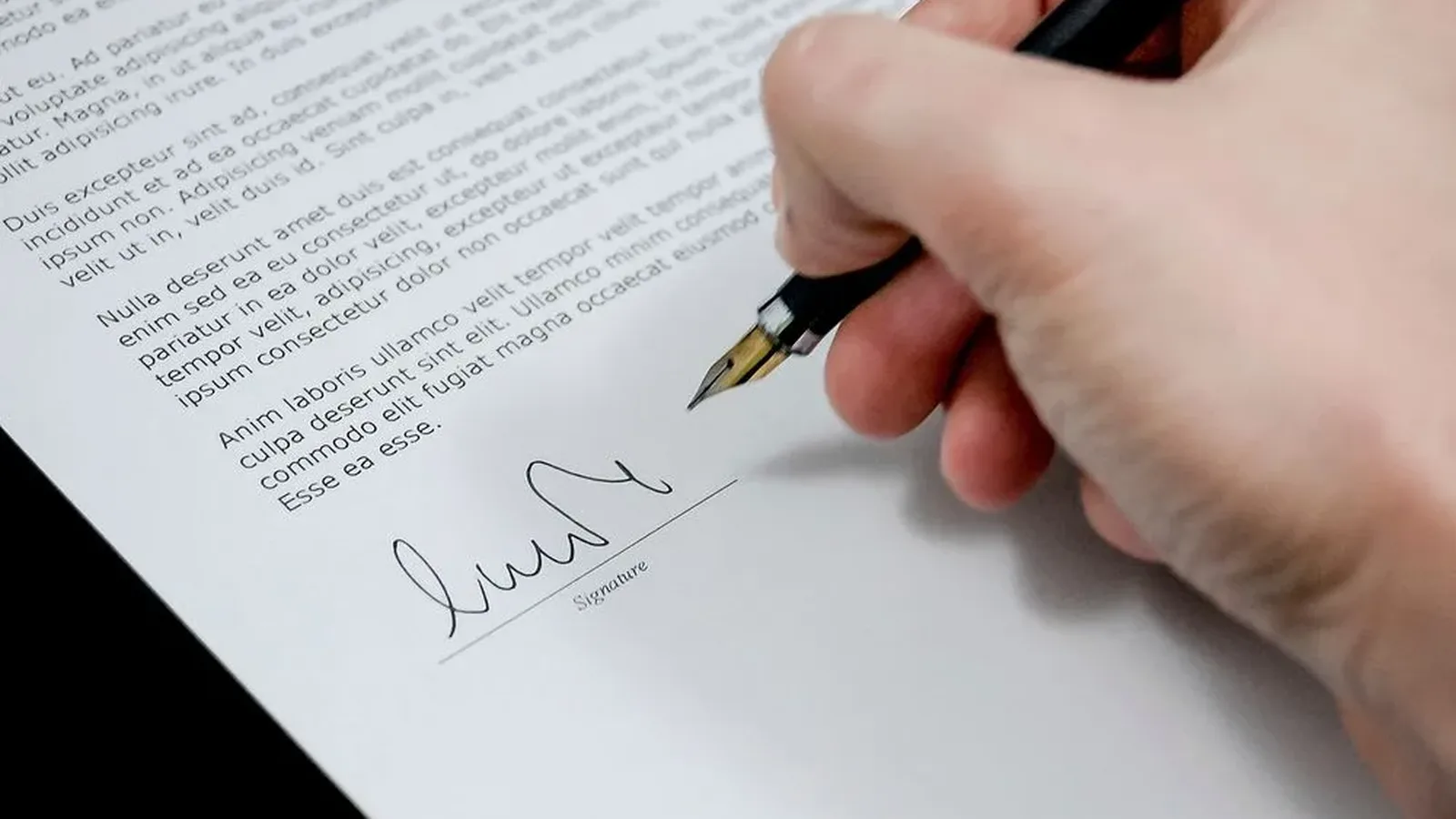
Before drawing up a sale deed, the notary carries out a specific set of checks: the identity and legal capacity of both parties (identity document, marital status, signing authority for a company); the existence and validity of the land title with the ANCFCC (Morocco’s land registry), via a recent cadastral record confirming the seller is indeed the registered owner and revealing any mortgages, seizures or easements; the release of any existing mortgage if the property is still tied to a bank loan; the calculation of registration duties, land registry fees and, on the seller’s side, the tax on real estate profit; and finally the formal compliance of the deed itself, read and explained to both parties before signing.
A notarized deed carries a double guarantee: the professional liability insurance every notary must carry, and the notaries’ guarantee fund set up under law 32-09, managed by the Caisse de Dépôt et de Gestion, which compensates injured parties in the event of a proven fault or the notary’s insolvency.
What they don’t check — and what stays your responsibility
The point buyers understand least: the notary checks the law, not the value or the condition of the property. They take note of the price agreed between the parties without judging whether it matches the market. They don’t inspect the roof, the electrical wiring, or hidden defects. Nor do they check fine-grained urban planning compliance — undeclared extensions, actual floor area versus the occupancy permit — which can significantly reduce a property’s real value after purchase. These checks are the job of an architect, a surveyor or an independent property expert, to be brought in before signing a preliminary contract, alongside the notary’s work rather than instead of it.
Notary or adoul: which one for your property?
Morocco has two distinct and mutually exclusive professions authorized to authenticate a property deed. The modern notary, governed by law 32-09, handles nearly all urban transactions involving a registered property with a land title. The adoul, traditional notaries of Islamic law who work in pairs under a judge’s supervision, remain competent for family acts, inheritance matters, and certain unregistered properties under the moulkiya regime. A property with a land title must go through a notary; for a property still under moulkiya, the question is worth asking before any purchase offer — our guide to land titles and moulkiya explains how to tell the two statuses apart.
Fees: how much, and are they negotiable?
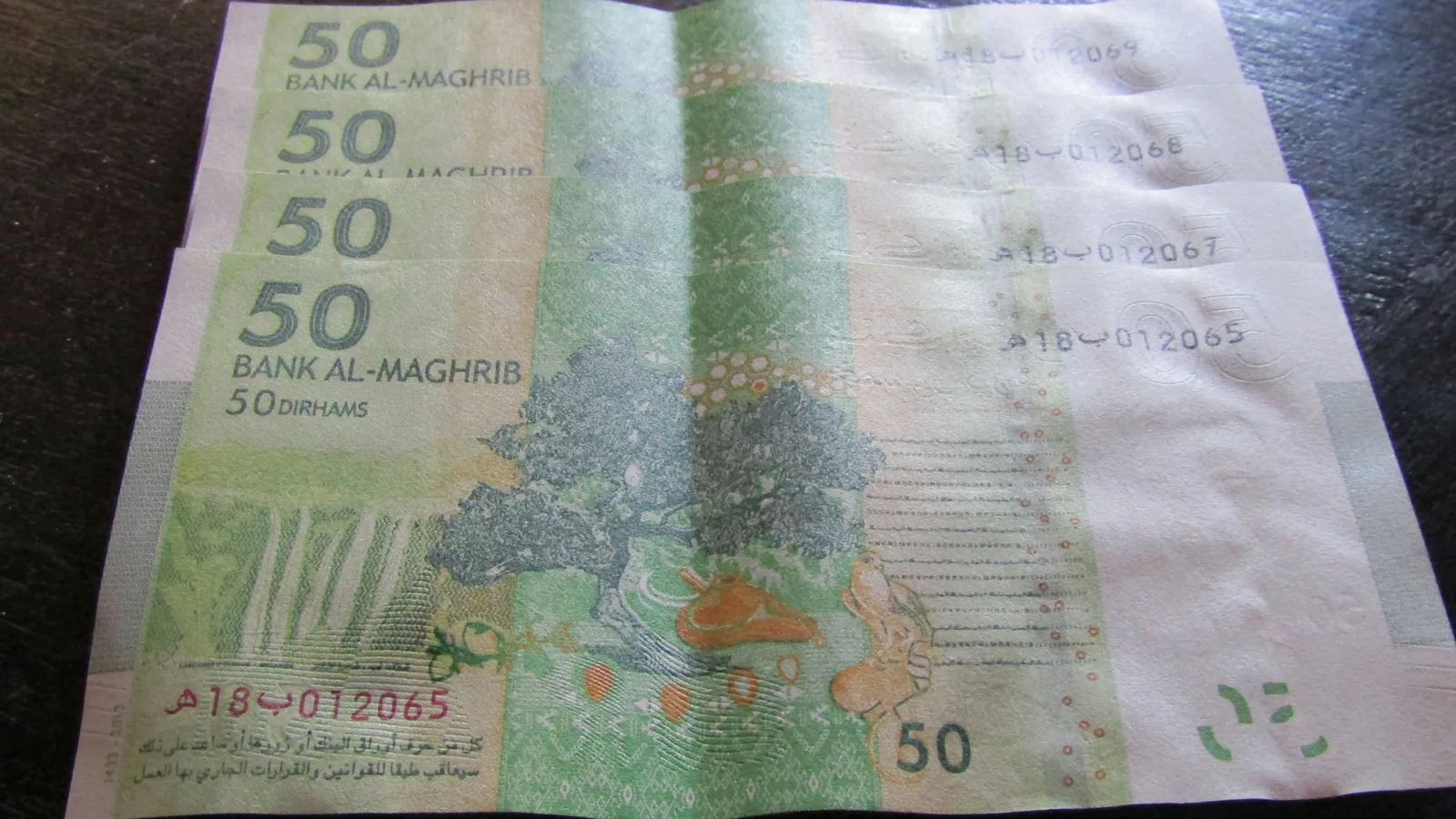
Unlike registration duties and land registry fees, which are set by law, notary fees are negotiable. The common practice is around 1% of the pre-tax sale price, with a sliding scale for larger deals — closer to 0.5% for transactions above several million dirhams — and a flat minimum applied to small transactions. A 20% VAT applies to these pre-tax fees under the 2023 finance law. These fees come on top of the registration duties and land registry fees already broken down in our guide to real estate taxation in Marrakech, for total acquisition costs that commonly reach 6 to 8% of the price. Before signing a preliminary contract, it’s worth asking the notary for a detailed written estimate of all these costs.
How to choose one well, especially from abroad
In Morocco, buyers are free to choose their own notary: nothing requires using the seller’s notary or one located near the property. For a foreign buyer or an MRE running the deal remotely, three criteria matter most. First, independence: prefer a notary with no commercial ties to the developer or the selling agency, to avoid a conflict of interest on a file where their pay is tied to the declared price. Second, experience with international files: not every notary is equally familiar with the specifics of non-resident buyers (powers of attorney, foreign-currency contributions, non-resident taxation). Third, checking registration: the official directory of the Conseil National de l’Ordre des Notaires du Maroc confirms whether a notary is currently practicing, and the French Embassy in Morocco publishes, for each consular district including Marrakech, a list of recommended notaries — a useful starting point, even though the document explicitly states it does not commit the consulate’s responsibility for the quality of services or the level of fees. Payments to the notary’s office, like the rest of the transaction, should follow the traceability rules covered in our guide to traceable property payments, and for a purchase financed by a foreign buyer or MRE, choosing a notary also ties into the bank file requirements detailed in our guide to mortgages for foreigners and MRE.
Checklist before signing
- Confirm the notary appears in the official CNONM directory and is currently practicing
- Make sure they are independent from the seller or developer
- Ask for a detailed written estimate of all costs (fees + duties + ANCFCC)
- Don’t mistake their role for a technical expert’s: have the property inspected separately if there is any doubt about its condition or planning compliance
- Check whether the property is registered (notary mandatory) or under moulkiya (adoul possible)
- Make every payment tied to the deed through a traceable method, never in cash beyond the legal thresholds
The notary remains the central pillar of legal security in a Moroccan property purchase, but does not cover the whole transaction risk. Understanding exactly what their mission covers — and pairing it with an independent technical and tax review when the file warrants it — remains the best way to avoid disappointment after signing.
Keywords
Disclaimer : This article is editorial analysis and does not constitute financial, legal or tax advice. Any investment decision should be preceded by consultation with qualified professionals.
Sources
- Conseil National de l'Ordre des Notaires du Maroc — The role of the notary
- Conseil National de l'Ordre des Notaires du Maroc — Guarantees of the notarized deed
- French Embassy in Morocco — List of recommended notaries (Marrakech consular district)
- ReaConsult — The notary and the property transaction in Morocco: duties, limits and fees (law 32-09)