In Marrakech, two seemingly identical properties — same neighborhood, same standing, same asking price — can rest on entirely different legal foundations. One has a land title registered with the Land Registry. The other relies on a moulkiya, a possession deed drawn up by adouls (Islamic notaries). This difference doesn’t show during a viewing. It has to be verified on paper, before signing anything — and it directly determines access to bank financing and the security of the purchase.
Land title: proof of ownership enforceable against everyone
The land title (titre foncier, TF) is issued by the National Agency for Land Registry, Cadastre and Cartography (ANCFCC) at the end of a registration procedure. Once established, it stands as definitive proof: it fixes the exact boundaries of the plot, any charges against it (mortgage, easement), and the identity of the registered owner(s).
This document has two features a moulkiya doesn’t have:
- once registration is complete, it generally can no longer be challenged by an earlier claim
- Moroccan banks systematically require it to grant a mortgage or register a loan against the property
Each land title is identified by a number and a prefecture index (for example, a letter for Marrakech’s land registry), which can be looked up through ANCFCC’s online service.
Moulkiya (melkia): a presumption, not an absolute guarantee
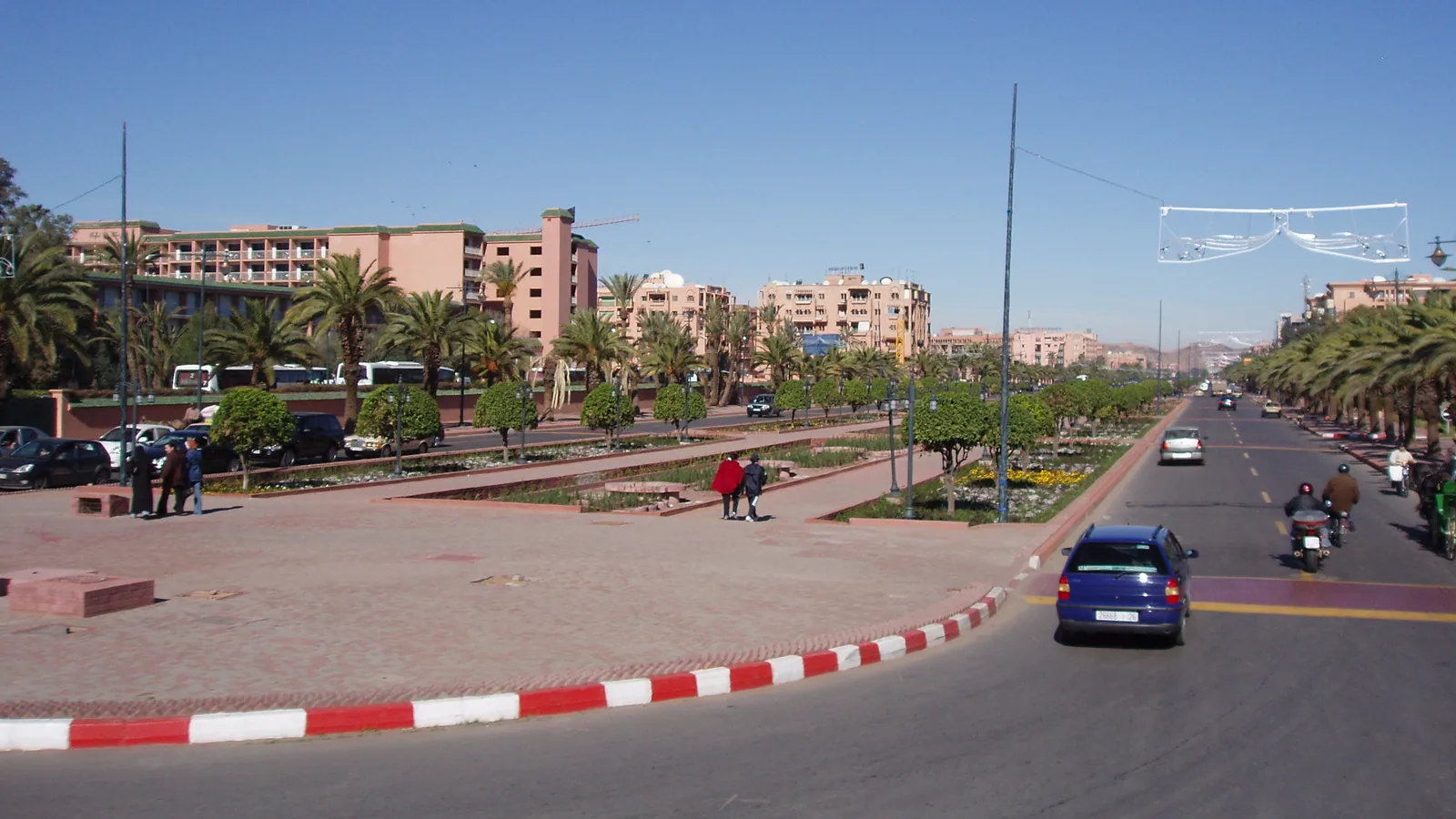
The moulkiya isn’t a title issued by the state. It’s a notarial (adoul) deed recording peaceful, public and continuous possession of a property, with no known opposition at the time it was drawn up. It remains common on older properties in the medina and on peri-urban land — including some areas along Route d’Amizmiz or on the fringes of the Palmeraie, where part of the land has never been registered and some plots retain agricultural status, requiring a change of designation before any construction.
In practice, a moulkiya exposes the buyer to three limits:
- it can be challenged by a third party able to prove earlier, continuous and peaceful possession of the same property
- it doesn’t always precisely define the property’s boundaries, area or easements
- Moroccan banks generally refuse to finance the purchase of an unregistered property, which rules out a large share of buyers relying on a mortgage
“The land title is definitive and enforceable against everyone. The moulkiya remains a presumption of ownership, which can be set aside by contrary proof.”
A property held under moulkiya can be secured after the fact through a voluntary registration procedure — but this takes time and is only worth pursuing if started before the purchase, not after.
How to check a land title before signing
Verification is done directly with ANCFCC, on its official portal (ancfcc.gov.ma), using the land title number and prefecture index provided by the seller:
- an ownership certificate (certificat de propriété) can be ordered online, costs 100 MAD regardless of channel (counter or online), and is delivered as an electronically signed PDF with a QR code for authenticity verification
- this certificate shows the registered owner(s), the surface area, any charges (mortgages, oppositions, seizures), and the exact cadastral references
- ANCFCC’s Mohafadati service lets you monitor a land title and receive an alert if there’s any movement on the property (mortgage registration, opposition, planned sale)
- the authenticity of any document issued by ANCFCC (certificate, cadastral plan) can be re-checked online through the portal’s verification service
Since May 4, 2020, ANCFCC has offered these steps remotely — request, tracking and payment — without a visit to a land registry office, except for jointly-owned (indivision) properties, which still require additional checks before any update to the registry.
For a property still undergoing registration (application filed but title not yet issued), extra caution is needed: the procedure includes publication in the Official Bulletin, a contradictory boundary survey (bornage), then a two-month opposition period after the survey closes before the registrar can rule. In 2024, the average registration time observed in Marrakech was between 8 and 10 months, with no guaranteed timeline — a point to factor into any preliminary contract that ties delivery or financing to the title being issued.
The notary’s role (and why trusting them blindly isn’t enough)
Before drawing up a sale deed, a Moroccan notary must verify the identity and legal capacity of the parties, their marital status, the formal validity of the deed, and confirm the property isn’t subject to an apparent mortgage or dispute. The profession is governed by law No. 32-09 and subject to mandatory professional liability insurance.
That check, however, remains documentary and tied to a single point in time. It doesn’t excuse the buyer — or their advisor — from requesting a recent ownership certificate themselves (ideally dated a few days before signing) and comparing it point by point with the sale deed: seller’s identity, surface area, charges, absence of opposition. For an off-plan purchase, the same rigor applies to the payment schedule: our article on VEFA legal guarantees in Morocco details the schedule set by law and the mandatory escrow account.
What to check before buying in Marrakech
- Always ask for the land title number and its prefecture index — never settle for a copy of a deed or a moulkiya presented as sufficient
- Order a recent ownership certificate directly on ancfcc.gov.ma rather than relying on a document supplied by the seller or agency
- In peri-urban areas (Route d’Amizmiz, the edges of the Palmeraie, agricultural sectors), check first whether the property is titled, under registration, or held under simple moulkiya
- If the property isn’t titled, factor the delay and uncertainty of registration (several months, no guarantee) into your decision and your financing plan
- Never make a significant payment before comparing the ownership certificate, the proposed deed and, where relevant, the opinion of an independent notary
A poorly titled property isn’t necessarily a bad investment — but it’s a risk that must be known, quantified and accepted knowingly, never discovered after signing. Once the land status is verified, the actual acquisition costs and property taxes in Marrakech remain the other line item to budget for, especially in neighborhoods where prices have risen the most.
This article is for general informational purposes and does not replace legal or notarial advice tailored to your personal situation. Administrative deadlines and procedures can change; always verify current information with ANCFCC before making any purchase decision.
Keywords
Disclaimer : This article is editorial analysis and does not constitute financial, legal or tax advice. Any investment decision should be preceded by consultation with qualified professionals.