Buying a plot in Marrakech also means buying an annual charge that many buyers only discover after signing. Since January 2026, that charge — the tax on undeveloped land (TNB) — works on a new logic and, in well-serviced areas, at a new level.
What law 14-25 changes
The reform rests on law no. 14-25 of 12 June 2025, according to Le360. The bill had been adopted by the House of Representatives on 13 May 2025 (Médias24). Since January 2026, the rate no longer depends only on administrative zoning but on how well the plot is actually serviced: roads, water, electricity, sanitation, public lighting, local services.
In practice, each commune must map its facilities, classify its sectors and adopt a tax order; new rates apply from the following 1 January (Le360). Zones are delimited by decision of the president of the communal council, endorsed by the governor (Médias24). Le360 reports that Casablanca and Marrakech announced new rates in line with law 14-25 from 1 January 2026, without publishing the Marrakech figures: we could not verify them.
The question for a plot is no longer “which zone is it classified in?” but “which services actually reach it?”.
The amounts: from 0.5 to 30 DH per square metre
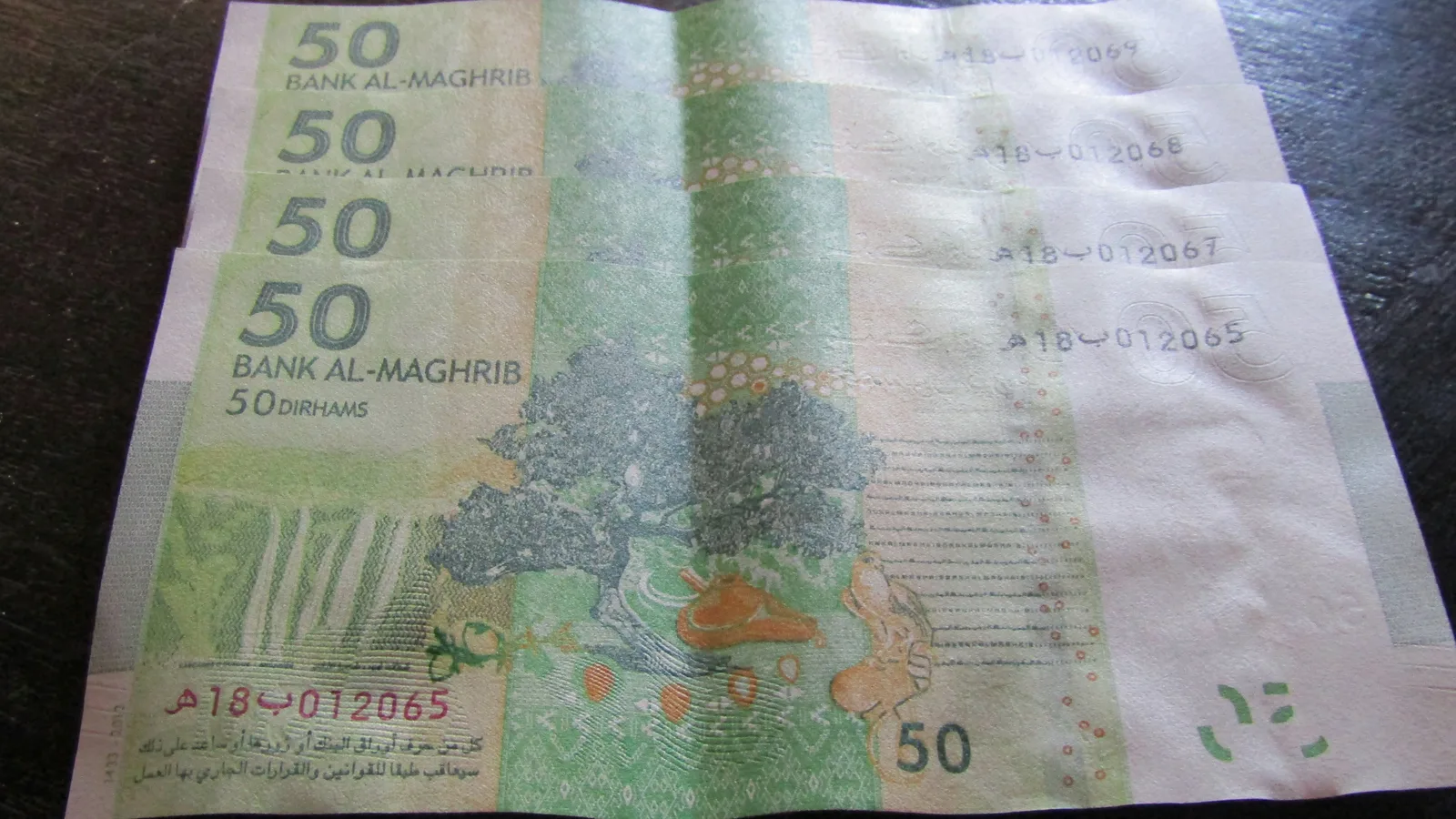
According to Le360 (September 2026), the schedule has three categories:
- well-equipped zones: 15 to 30 DH/m²;
- moderately equipped zones: 5 to 15 DH/m²;
- poorly equipped zones: 0.5 to 2 DH/m². Médias24, reading the May 2025 bill, cited 0.5 to 5 DH/m²: our sources do not settle the gap.
Before the reform, rates were 4 to 20 DH/m² for apartment-building zones and 2 to 12 DH/m² for villa and individual-housing zones (Médias24). In Casablanca they reached 20 and 12 DH/m² (Le360).
What that means for an owner, using Le360’s examples: 1,000 m² at 10 DH/m² is 10,000 DH a year, at 25 DH/m² 25,000 DH, and one hectare in a well-equipped zone can reach 300,000 DH a year. No tax is collected below 200 DH (Médias24). The fiscal stakes are real: the TNB raised 2.81 billion dirhams in the first seven months of 2026, up 48.9% year on year and 110% of the 2.55 billion annual forecast (Le360).
Who pays, who is exempt
The tax targets plots inside urban perimeters and land attached to buildings when its area exceeds five times the built area (FNH). It is owed by the owner or, failing that, the possessor; in joint ownership the tax is assessed on the indivision and each co-owner remains jointly liable for the whole (FNH).
Le360 lists among the exemptions: the State, local authorities, public Habous and some collective lands; agricultural or professional land up to five times the farmed area; and, temporarily, plots without water or electricity networks, under a building ban, or covered by a subdivision or construction permit. Development operations get 3 years of exemption up to 30 ha, 5 years from 30 to 100 ha, and 7 years above.
Payment is due before 1 March; a late or missing declaration triggers a 15% surcharge plus 0.50% per month of delay (Le360).
In Marrakech: certified zoning and disputes

Circular no. 323.G.2, in force since 5 March 2026, frames enforcement: in Marrakech, Tangier and Fez, land cannot be taxed without previously certified zoning, and only four categories of zones are taxable (urban perimeters under law 131-12, classified centres, tourist or expansion zones adjacent to cities, finalised development perimeters). Le360, relaying Les Inspirations Eco, cites a peripheral Marrakech plot taxed although no master plan had been validated, and says governors have 90 days to review files and cancel irregular assessments.
Owners must prove their case: agricultural activity certificate, utility connection certificate, evidence of construction progress. Appeal commissions reportedly run at about 30% of capacity, with delays of 6 to 18 months (same source). These figures come from a press review and should be treated with caution.
What it means for a land buyer
The tax erodes the return on land held “on standby”. It weighs mostly on speculation in well-serviced areas, while poorly served outskirts stay lightly taxed but more exposed to permit blockages. Our guide to land buildability in Marrakech and the one on land status for foreigners remain the starting point; the TNB goes into your budget, as the housing tax and TSC do for a built property.
Checklist before buying
- Ask the commune for the TNB rate applicable to the exact plot and its servicing category (not published for Marrakech in our sources to date).
- Multiply area by rate and carry the result over your planned holding period before negotiating the price.
- Ask for proof of payment or exemption for previous years.
- Check whether the plot qualifies for a temporary exemption (subdivision or construction permit, no networks).
- If you will build soon, compare the tax cost with the permit timeline.
- In joint ownership, remember co-owners’ joint liability.
- Have your notary or a tax adviser review the figures before signing.
This article is informational and does not replace advice from a notary or tax adviser. Marrakech’s exact rates depend on the communal order and could not be verified.
Keywords
Sources
- Le360 — Taxe sur les terrains non bâtis : 2,81 milliards de dirhams de recettes en sept mois, un bond de 49 % (18 September 2026)
- Le360 — Taxe sur les terrains non bâtis : les limites techniques des communes (24 March 2026)
- Médias24 — Taxe sur les terrains non bâtis et fiscalité locale : ce que change la loi n° 14-25 (14 May 2025)
- Bladi — Maroc : la taxe sur les terrains non bâtis va changer dès 2026
- FNH — Taxe sur les terrains non bâtis : les modalités d'application toujours mal assimilées