Since 2023, renting out an apartment in Guéliz or a riad in the medina on Airbnb without authorization is no longer a tolerated grey area — it is now a sanctioned offense. Decree n° 2.23.441, which implements law n° 80-14 on tourist establishments, requires an operating authorization before the first booking, registration on the official STDN platform, and exposes non-compliant hosts to fines of up to 100,000 MAD. Here is the real procedure, step by step, for an owner who wants to rent legally in Marrakech.
What law 80-14 covers in Marrakech
The law classifies tourist accommodation into categories: hotel, guesthouse (maison d’hôtes), riad, kasbah, gîte, pension — and two categories that directly concern most independent owners. The furnished tourist rental (meublé touristique) covers an apartment or villa rented short-term through Airbnb, Booking, or directly. Home-stay accommodation covers one or more rooms rented within the owner’s own residence, with a maximum number of rooms set by joint decision of the relevant ministries.
According to Tourism Minister Fatim-Zahra Ammor, interviewed by Médias24 when the decree was published, the text pursues three objectives: centralizing applications through the Regional Investment Centers (CRI), having authorizations issued by governors after review by the Unified Regional Investment Commission (CRUI), and introducing a new classification system that accounts for service quality, not just the property’s physical standards.
The authorization procedure, step by step

The administrative process follows a precise sequence, with a potential bottleneck at each stage.
- Compile the file. You need a property title, or for a tenant, a lease with an explicit subletting clause — many owners only discover too late that their lease is silent on this point, which blocks the file until an amendment is signed with the landlord.
- File at the CRI. The Regional Investment Center for the region where the property is located receives the file and checks that it is complete before forwarding it for review. An incomplete file is returned to the applicant, costing an entire cycle.
- Review by the competent commission. The file is examined under the authority of the wali or governor, with input from the CRUI. The review covers the property’s compliance with basic safety standards — fire prevention, electrical and gas installations — and the applicant’s legal standing with respect to the property.
- Issuance of the authorization. Once granted, it is valid for five years, renewable, with compliance visits during that period.
No text guarantees a fixed timeframe: expect several weeks between filing and issuance, and plan well ahead if you are targeting Marrakech’s high season (autumn through spring).
STDN registration and day-to-day obligations

Getting the authorization is not the end of the process. Morocco has digitized part of the oversight through STDN (Système de Télédéclaration des Nuitées, at www.stdn.ma), a platform built jointly by the Ministry of Tourism, the Ministry of the Interior, the national police (DGSN) and the Royal Gendarmerie. Registration generates a registration number and requires daily electronic tele-declaration of overnight stays. A joint circular from the Interior and Tourism ministers, sent in February 2024 to walis and governors, organized the rollout; by the end of May 2024, 83% of operating establishments were already registered.
Day to day, three obligations recur with every stay: collecting each guest’s identity (passport for foreigners, national ID for Moroccans) and keeping the forms for one year; maintaining a booking register; and taking out insurance covering fire, theft of guests’ belongings and civil liability — a standard home insurance policy does not cover tourist rental activity. In Marrakech specifically, this documentation requirement makes in-person check-in practically unavoidable: in the medina, a key box on a narrow derb door cannot satisfy it, which is why most non-resident owners rely on a local manager.
Taxes, fiscal rules and penalties for non-compliance
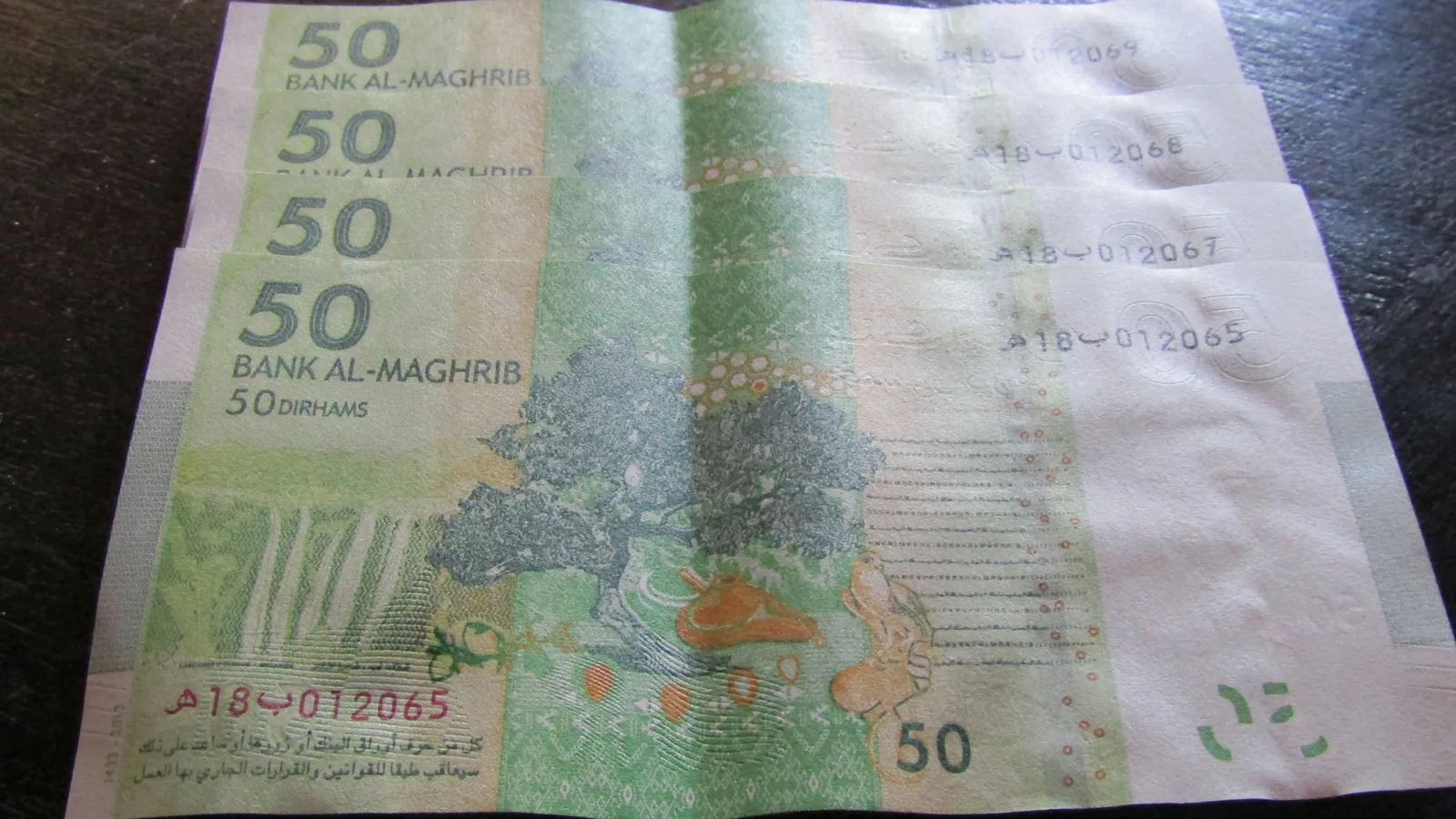
Two local taxes apply per night and per guest: the tourist tax (taxe de séjour) and the tourism promotion tax (TPT), with amounts that vary by municipality and property category. Unlike in France, Airbnb does not collect or remit these taxes in Morocco: it is up to the owner to build them into the price, account for them separately, and remit them to the local authorities according to the rate in force, which should be checked with the municipality or the Direction Générale des Impôts.
Income from furnished tourist rentals is also treated as business income, subject to Morocco’s progressive personal income tax scale, with a specific VAT regime applying to tourist accommodation above a certain turnover threshold — the exact calculation depends on each owner’s personal situation and should be validated with a Moroccan chartered accountant.
On penalties, Article 42 of law 80-14 provides that a formal report is drawn up and forwarded to the King’s Prosecutor General in the event of operating without authorization, with a fine ranging from 50,000 to 100,000 MAD. In case of repeat offenses, the operator risks heavier measures: suspension of activity or seizure of rental income, potentially compounded by a tax reassessment if the income was not declared.
What this means in practice for an owner in Marrakech
In practice, the timeline for a purchase-to-short-term-rental project now needs to build in these steps from the moment of signing, not once the first bookings start coming in. In a co-owned building — common in Guéliz and the modern districts — the co-ownership bylaws can themselves restrict or ban tourist rental, a point worth checking before buying, alongside the checks already needed on the property title and moulkiya before buying in Marrakech. For a riad in the medina run as a guesthouse, the star classification introduced by the decree adds to the already-known renovation and management constraints covered in our guide to riads in Marrakech. And for a villa with a pool in a gated subdivision, this authorization comes on top of the subdivision charter already discussed in our analysis of villa investment in Marrakech.
Checklist before listing a property for short-term rental
- Check the property title, or have a subletting amendment signed if you are a tenant
- File the complete application with Marrakech’s Regional Investment Center (CRI), allowing several weeks for processing
- Do not market the property before the authorization is actually issued
- Register on the STDN platform once the authorization is obtained
- Set up collection and one-year retention of guest registration forms
- Take out insurance dedicated to tourist accommodation activity
- Build the tourist tax and TPT into the price, and organize remittance to the municipality
- Check the co-ownership bylaws if the property is in a shared building
What to remember
Short-term rental in Marrakech remains an active market, but it is no longer an activity you can start simply by posting a listing. Between the CRI file, the review under the authority of the wali or governor, STDN registration and the ongoing declaration obligations, the full process is measured in weeks, not days. An owner who starts the process in good faith, with a complete file from the first filing, has the best protection against an inspection — and against the 50,000 to 100,000 MAD fine set for any undeclared operation.
Keywords
Disclaimer : This article is editorial analysis and does not constitute financial, legal or tax advice. Any investment decision should be preceded by consultation with qualified professionals.
Sources
- Médias24 — New decree on tourist accommodation: explanations from Tourism Minister F.-Z. Ammor
- La Vérité — Online overnight-stay tele-declaration (STDN) for tourist establishments now operational
- StayLabs — Implementing decree of law 80-14 in Morocco: the authorization procedure step by step
- StayLabs — Short-term rentals in Morocco: the complete guide to law 80-14
- StayLabs — Renting on Airbnb in Marrakech: what foreign hosts need to know