A riad passed to three children living in Europe; a villa whose land title still bears the name of an owner who died five years ago. Stalled property successions are routine business for Moroccan notaries. The problem is rarely the tax — Morocco is considerably gentler than France on that front. It comes from two things heirs discover too late: the law deciding who inherits is often not the one they assume, and the inherited property remains legally unusable until one specific formality has been completed.
The applicable law depends on nationality — and on faith
This is the least intuitive part of Moroccan succession law. Article 18 of the dahir of 12 August 1913 on the civil status of French nationals and foreigners lays down the principle: the estate of a foreigner in Morocco, including immovable property located on Moroccan soil, is governed by the deceased’s national law. A Dutch owner of a riad in the medina therefore has his estate settled under Dutch law, not under the Moroccan Family Code.
Two qualifications matter. First, religion: according to Casablanca notary Jad Aboulachbal, quoted by Finances News Hebdo, if the deceased was Muslim — Moroccan or foreign — Islamic law applies; if he was a Moroccan of Jewish faith, Hebraic law; if he was a non-Muslim foreigner, the law of his nationality.
Second, dual nationality: where the deceased held several nationalities including Moroccan, only the Moroccan nationality is taken into account. The estate in Morocco then falls under Moroccan law — a decisive difference for dual-national expatriates, many of whom wrongly assume their country of residence will govern their Moroccan assets.
For EU nationals, Regulation (EU) No 650/2012, applicable to deaths occurring on or after 17 August 2015, designates the law of the state of habitual residence at the time of death (article 21). But its article 34 admits renvoi: for a European resident in Morocco, it points back to article 18 of the 1913 dahir, which in turn refers to the deceased’s national law. The German Embassy in Rabat notes that this mechanism remains largely untested and that the notion of “habitual residence” is still a source of uncertainty — hence its recommendation to settle the question through a choice of law expressed in a will.
What the succession actually costs
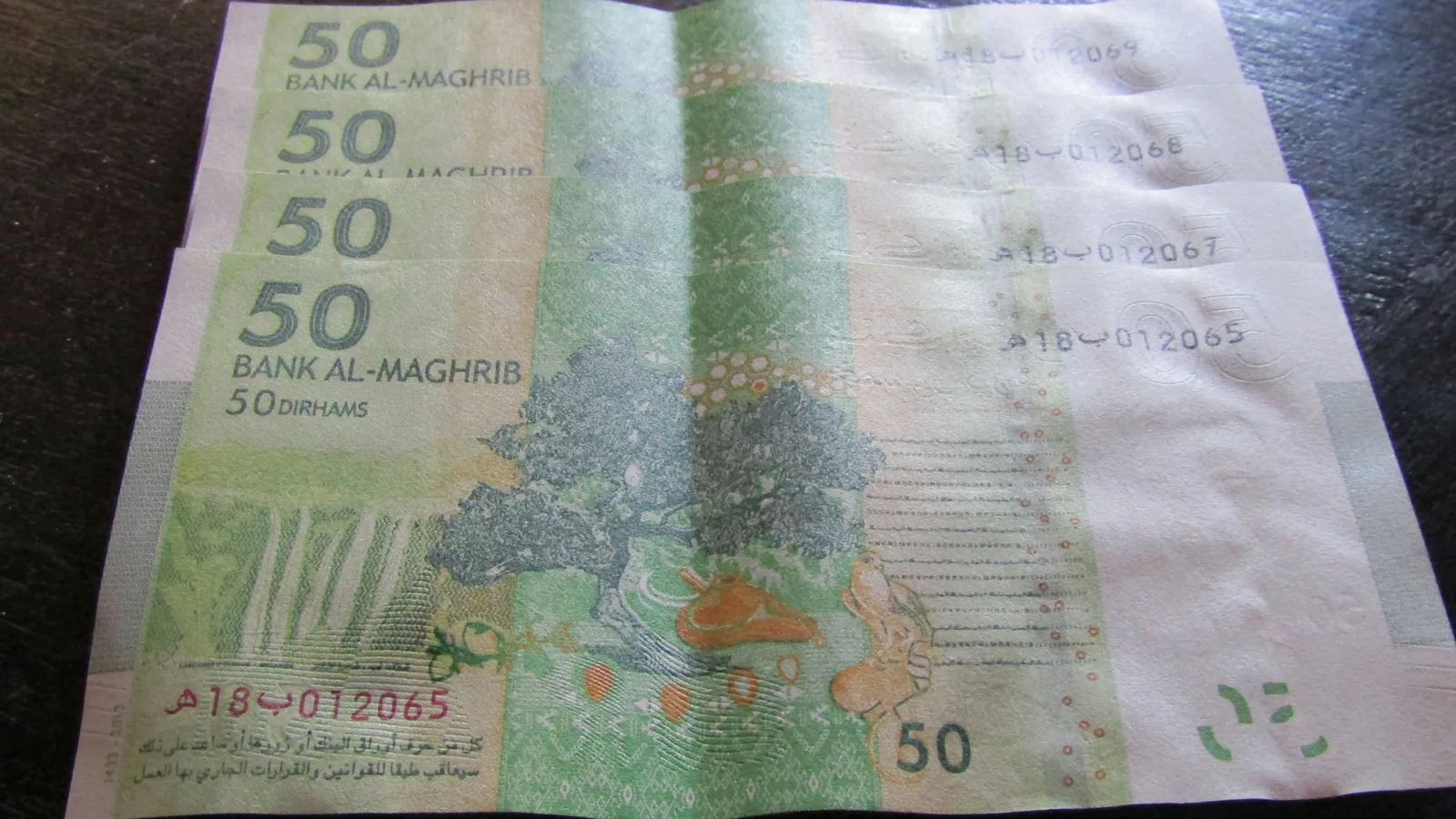
First piece of good news: the registration duty schedule set out in article 133 of the General Tax Code contains no death-transfer rate. Morocco does not tax heirs on the value of what they receive, unlike French inheritance tax. What carries duty are the deeds that accompany the succession:
- Division between co-heirs: 1.50% (article 133-I-C-6°). Note the trap: where the division involves a balancing payment or an added value, that portion is taxed at the rates for transfers for consideration — 4% for a built unit, 5% for bare land.
- Post-death inventory: 1% (article 133-I-D-9°).
- Delivery of a legacy: 1% (article 133-I-D-4°).
- Minimum charge: 100 dirhams per deed (article 133-II).
On top of these come land registry fees — set by decree no. 2-16-375 of 18 July 2016, published in Official Bulletin no. 6484 of 21 July 2016 — plus notary or adoul fees, covered in our guide to the notary’s role and fees in Morocco.
One warning is in order: several websites circulate a supposed “inheritance exemption up to MAD 1,000,000 between spouses and descendants”. A reading of article 129 of the General Tax Code, which lists registration duty exemptions exhaustively, shows no such provision. That figure should not be used as the basis for an estate plan.
Compared with an ordinary purchase, where duties, land registry fees and professional fees commonly reach 6 to 8% of the price — see our guide to property taxation in Marrakech — the tax cost of a transmission stays modest. The real cost of a badly prepared succession lies elsewhere: in lost time.
Registration on the land title: the step that blocks everything

This is what non-resident heirs almost always discover too late. On a registered property — one holding a land title — the heirs become owners from the day of death. But, as the notary quoted by Finances News Hebdo points out, they can only legally dispose of it once their rights have been entered on the land title, by filing the succession deed (notarial deed, deed of notoriety, or rabbinical deed as the case may be) with the land registry.
Until that entry is made, the title continues to bear the deceased’s name. The consequences: no sale, no mortgage, no bank financing secured on the property. An estate split between heirs in Casablanca, Brussels and Montreal can sit frozen for years — while service charges and local taxes keep running. If the property is later sold, the capital gain follows the rules of the property profit tax, and moving the proceeds abroad goes through the channel described in our guide to repatriating sale proceeds.
Moulkiya property: the ten-year risk
Morocco operates two parallel land regimes, and that duality radically changes the risk exposure. On a registered property there is no acquisitive prescription: heirs’ rights do not lapse through the mere passage of time.
On property under the traditional regime — moulkiya, still common in the medina and in Marrakech’s rural outskirts — the rule is reversed. Finances News Hebdo states it plainly: heirs may see their rights extinguished if the property has been occupied peacefully and publicly by a third party for more than ten years. A family riad left to a caretaker or a long-standing tenant, with no deed and no follow-up, can slip away from its rightful owners. To tell the two statuses apart, see our comparison of land title and moulkiya.
Planning ahead: a will, a gift, or both
Two tools exist, with very different effects.
A will does not reduce costs, but it settles the uncertainty over the applicable law and the order of heirs. For a non-Muslim foreigner it allows the choice of law opened up by the European regulation. Practitioners recommend lodging it with a notary in the home country or, failing that, with a Moroccan notary or the relevant consulate. A will that is formally defective has no effect: the statutory order then applies, regardless of the deceased’s wishes.
A lifetime gift transfers ownership immediately. Article 133-I-C-4° of the General Tax Code subjects it to 1.50% where it is made in the direct line, between spouses, between siblings, or under a kafala arrangement — the same rate as the estate division. A gift therefore saves no tax, but it avoids joint ownership and a blocked land title. It is, on the other hand, irreversible.
Checklist
- Check the property’s regime: registered land title or moulkiya. This is the single most decisive question.
- Identify the law applicable to your estate: nationality or nationalities, faith, habitual residence.
- Draw up a formally valid will and lodge an identifiable copy of it.
- On death, have the succession deed drawn up and file it with the land registry without waiting for the division.
- Budget 1% to 1.5% in duty on the deeds, plus land registry and professional fees, and check for any balancing payment.
- On a vacant moulkiya property, do not let a third party settle into long-term occupation.
Moroccan succession law is not especially expensive. It is especially formal. That demand for form — a valid deed, filed in the right place, within a reasonable time — is what separates a smooth transmission from a file frozen for years.
Keywords
Disclaimer : This article is editorial analysis and does not constitute financial, legal or tax advice. Any investment decision should be preceded by consultation with qualified professionals.
Sources
- Moroccan General Tax Code — Article 133 (proportional registration duties)
- Moroccan General Tax Code — Article 129 (exemptions from registration duties)
- German Embassy in Rabat — EU Regulation 650/2012 and article 18 of the dahir of 12 August 1913
- Finances News Hebdo — Real estate: what rights govern transmission and inheritance?
- Decree no. 2-16-375 of 18 July 2016 setting land registry fees (Official Bulletin no. 6484)