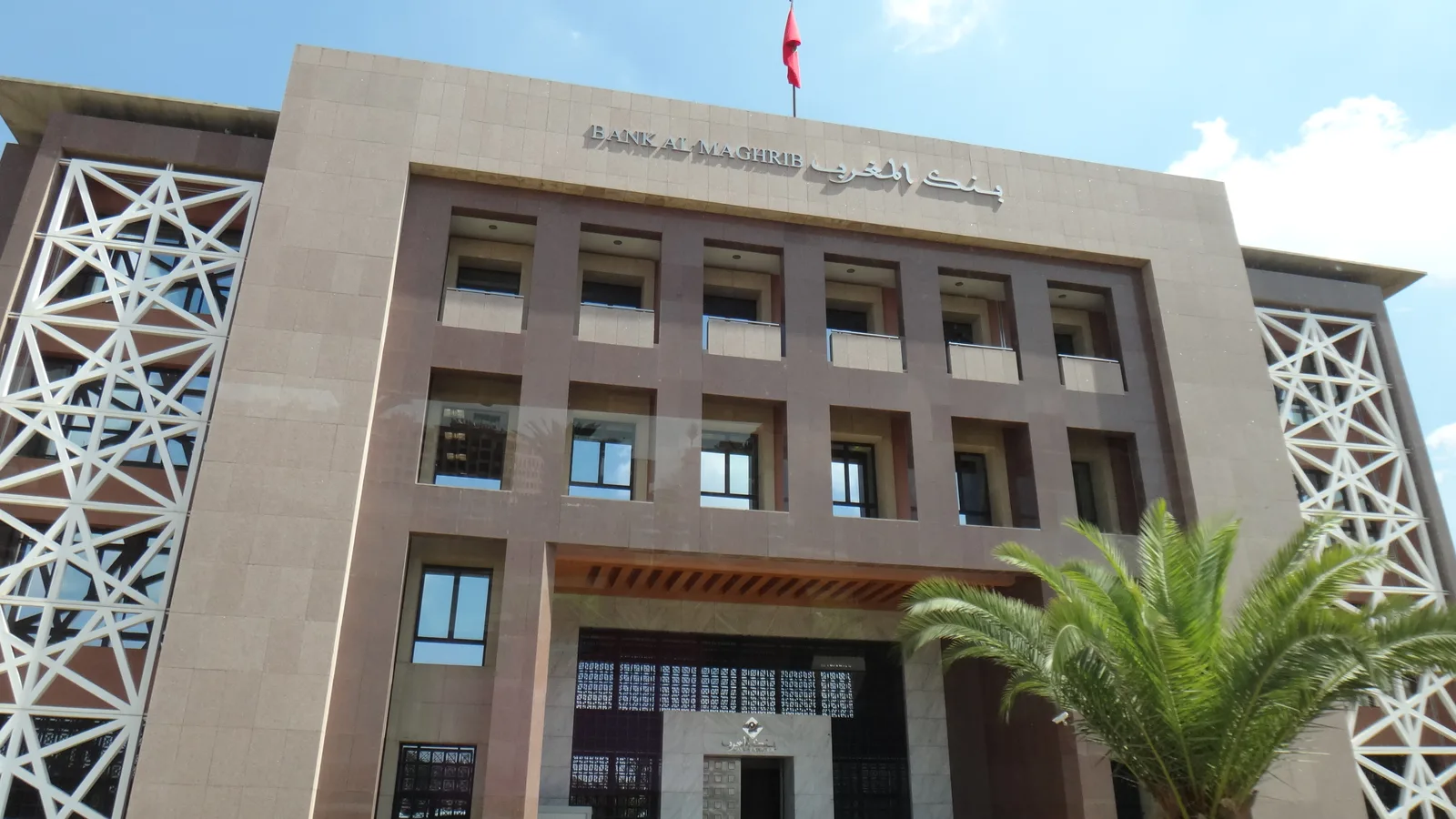
On 22 September 2026, Bank Al-Maghrib’s Council left its key rate at 2.25%, the sixth decision in a row with no change. For a buyer in Marrakech the good news is the absence of bad news: no hike in sight. But that figure is not what your bank will charge you, and understanding the gap matters before you sign a loan offer.
What Bank Al-Maghrib decided, and why
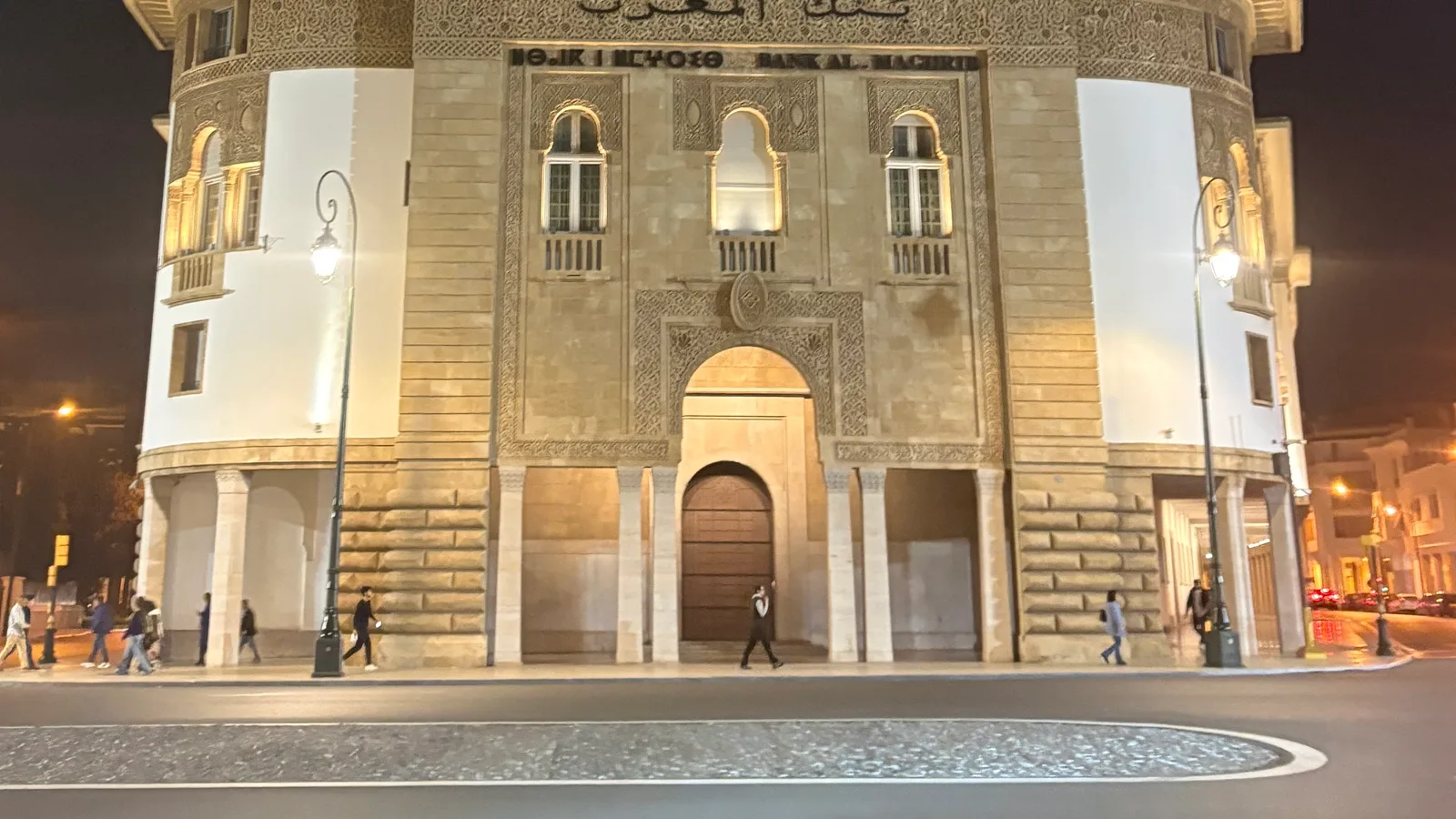
According to Le Matin, average inflation reached only 0.3% over the first eight months of 2026. The central bank forecasts 0.7% for the full year and 1.5% in 2027. Inflation this low leaves little reason to raise rates, and projected growth (4.4% in 2026, 2.9% in 2027) does not argue for an immediate cut either.
On financing, the central bank projects bank credit to the non-financial sector accelerating: +8.1% in 2026 versus 4.8% in 2025, then +6.1% in 2027. Recovering credit means active banks and mortgage files that are reasonably well received, but no price war is announced.
The key rate is a cost floor for banks, not the price you pay: between the two sit the bank’s margin, insurance and the borrower’s profile.
Why you do not borrow at 2.25%
The Wafir mortgage observatory (24 August 2026), based on Bank Al-Maghrib statistics and the Afdal barometer, gives these orders of magnitude:
- Average market rate: 4.64% in the first half of 2026, versus 4.59% in the second half of 2025;
- Average lending rate on mortgages: 5.06% in Q2 2026 (5.13% in Q1), a series that includes developers;
- Range by profile: from 3.75% (permanent-contract employee, high income, large deposit) to 4.80% (un-negotiated counter offer), with most offers between 4.10% and 4.50%;
- Dedicated MRE (Moroccans living abroad) grids: 3.55% to 4.30%.
These series do not cover the same scope and are not directly comparable, as Wafir itself notes. The key point is that monetary policy pass-through is partial. Since June 2024, according to Medi1 News, lending rates had fallen 58 basis points by end-September 2025, against 75 points for the key rate.
What one point of difference means on 1 million dirhams

Here is a simulation from our own calculation (constant payments, insurance and fees excluded) for a loan of 1,000,000 MAD:
| Rate | Term | Monthly payment | Total interest |
|---|---|---|---|
| 3.75% | 25 years | 5,141 MAD | 542,394 MAD |
| 4.20% | 20 years | 6,166 MAD | 479,770 MAD |
| 4.60% | 20 years | 6,381 MAD | 531,344 MAD |
| 5.00% | 20 years | 6,600 MAD | 583,894 MAD |
| 5.00% | 25 years | 5,846 MAD | 753,770 MAD |
Two lessons. First, between 4.20% and 5.00% over 20 years, the payment moves by 434 MAD but the total cost by more than 100,000 MAD. Second, stretching from 20 to 25 years at 5% lowers the payment by 754 MAD at the price of almost 170,000 MAD more interest. Wafir notes a gap of about 175,000 MAD between 3.75% and 4.80% over 25 years: our calculation gives 176,600 MAD.
Making use of it in Marrakech

A stable key rate gives visibility, not a gift. The lever remains your file and your ability to make banks compete. For a rental property, stress-test the loan with a lower rent and two months of vacancy: our net rental yield analysis explains the method. If you finance from abroad, see our guide to mortgages for MRE and foreigners, and for more simulations our September 2026 mortgage update.
One caveat: the rates above are published averages and ranges, not offers. No bank guarantees these levels, and the next Council meeting can change the picture.
Checklist before signing a loan offer
- Ask for three written offers with nominal rate, insurance and arrangement fees quantified.
- Require the amortisation schedule and check the amount actually borrowed.
- Compare the total cost (interest + insurance + fees), not just the monthly payment.
- Get the early repayment terms in writing.
- Test your budget with a rate one point higher and rent 20% lower.
- Keep a margin for acquisition costs, which come on top of the price, and do not neglect negotiating the property price itself.
Keywords
Disclaimer : This article is editorial analysis and does not constitute financial, legal or tax advice. Any investment decision should be preceded by consultation with qualified professionals.